Bessemer Venture Partners, a US-based venture capital and private equity firm, is betting that India’s next generation of healthcare platforms will be built not as large multi-speciality hospitals but as scaled, standardized single-speciality chains.
It estimates that the organized single-speciality segment will grow to $12.3 billion by 2030 from $4.4 billion in 2025, implying a 22% compounded annual growth rate—more than twice the pace it expects for multi-speciality hospital chains and the broader healthcare provider sector.
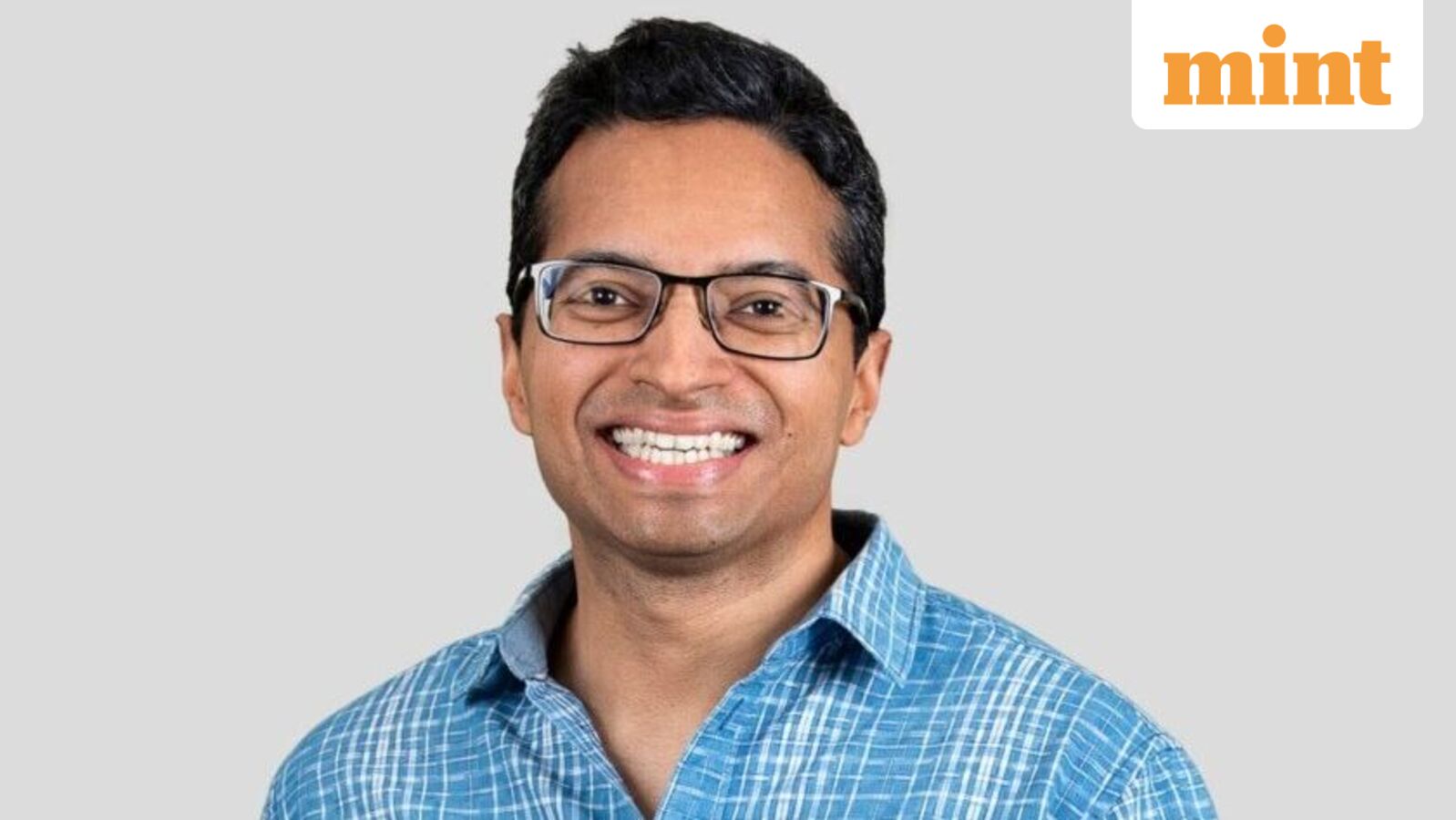
Central to Bessemer’s thesis is the expectation that category leaders in single-speciality care will acquire smaller clinics to broaden their footprint. In contrast, multi-speciality hospitals, after a decade of aggressive expansion, are under pressure to improve productivity, said Nithin Kaimal, a partner at Bessemer Venture Partners, in an interview with Mint.
“The ability to maximize average revenue per operating bed and optimize average length of stay becomes super important,” Kaimal said, adding that this pushes them to focus on the most complex procedures that require multiple specialists.
Bessemer estimates that average revenue per operating bed rose from $241 in 2015 to $625 in 2025, while average length of stay fell from 5.1 days to 3.8 days.
Yet, the shift is unfolding in a sector that has already attracted substantial private capital. Industry estimates cited in Bessemer’s own investment thesis deck put cumulative PE investment in offline healthcare providers at $10.6 billion between 2015 and 2025.
The deck flags several large deals that have shaped the space, including Blackstone Group’s 2023 investment of $591.1 million in Quality Care, Baring Private Equity Asia’s 2023 purchase of a majority stake in Indira IVF for $656 million, Temasek Holdings’ 2023 acquisition of an additional stake in Manipal Health for about $2 billion, and KKR’s 2025 acquisition of a majority stake in Kerala’s Meitra Hospital.
Room to manoeuvre
Even so, Bessemer argues there’s still ample headroom.
“Most of the private capital, if you look at dollars, has actually gone into the multi-speciality sector,” Kaimal said, pointing to the number of listed hospital chains such as Apollo Hospitals, Max Healthcare, Fortis Healthcare, Narayana Hrudayalaya, and others. “On the single-speciality spectrum, it is still very early days,” he added.
Bessemer is best known in India for backing internet companies, but it is now making a bigger push into offline healthcare delivery. In a new road map on single-speciality care, it invested $24 million NephroPlus (dialysis) in 2021, $13.8 million in Pluro (IVF) in 2025, and $31 million in Sukino (continuum care) in January, hoping a few category leaders can scale into national platforms and deliver exits through public listings or strategic sales. NephroPlus listed on stock exchanges in December 2025 with a ₹875 crore IPO
It is investing out of a dedicated India vehicle it announced in 2021, and also recently closed $350 million for its second India fund to back founders from early stages and beyond.
In its investment deck, Bessemer estimates that setting up a single-speciality centre can require from about $0.1 million for a dental clinic to $4.2 million for an oncology centre—the most capital-intensive speciality it tracks—while annual revenue potential at maturity spans a similar spectrum, from roughly $0.1 million for dental to as much as $7.1 million for oncology.
Kaimal said Bessemer typically backs single-speciality platforms early in their build-out, so it does not go in with a fixed target for how many centres a chain must add upfront, preferring to see the model work in the first few locations before pushing expansion.
He added that the execution path is rarely linear, with some centres misfiring even in otherwise strong platforms.
“Of course, you will make mistakes along the way… there’ll be an odd clinic here or there. You’ll never have every centre perform at peak Ebitda margins… When you do this repeatedly in the right manner across dozens of clinics, the math overall sort of evens out,” he added.
Easier said than done
However, experts cautioned that healthcare does not scale like a consumer internet playbook.
Saurabh Singhavi, director and chief operating officer at transaction advisory firm Alsisar Impact Pvt. Ltd, said the biggest risks are quality and trust, especially for doctor-led brands, which can prove fragile in a downturn. “In such single-speciality brands, the face of the business is often one doctor, and their reputation tends to outweigh everything else.”
If the quality of care is not up to mark, such ventures will not be able to survive, he said, adding that such businesses are built largely on outcomes and word of mouth, not on customer-acquisition playbooks common in the consumer internet.
That trust dynamic is also why he wants investors to track more than capex and return on investment measured purely through throughput. Beyond patient volumes, he said, diligence should evaluate turnaround time and how teams manage patients through the care journey.
Investors should also assess qualitative measures of care, he added. “If you are not able to deliver the care part, then it’s very difficult for that kind of business to thrive.”
Dr Arindam Basu, a practising doctor-entrepreneur and a partner at A Square Capital, said Bessemer’s single-speciality roadmap risks reading too “singular” and “linear” for a sector where models routinely evolve to survive.
He argued that India’s first wave of speciality and super-speciality hospitals often didn’t stay speciality for long. Many of the cardiology-led hospitals, such as Fortis Escorts in Delhi, Asian Heart Institute in Mumbai, and the erstwhile cardiac-focused Fortis Cunningham Road facility in Bengaluru, eventually broadened into multi-speciality formats to capture a larger market and diversify revenues.
“Single-speciality categories that have worked best in India are those with predictable, repeatable unit economics. Eye care has done extremely well, and it still remains possibly the country’s best story,” Basu added.
He said Bessemer’s thesis will ultimately be tested in tier-II and tier-III cities, where sharper pricing and wider insurance adoption can expand the market, even as referrals from general practitioners remain a key demand driver.
#Bessemer #swimming #tide #India #healthcare