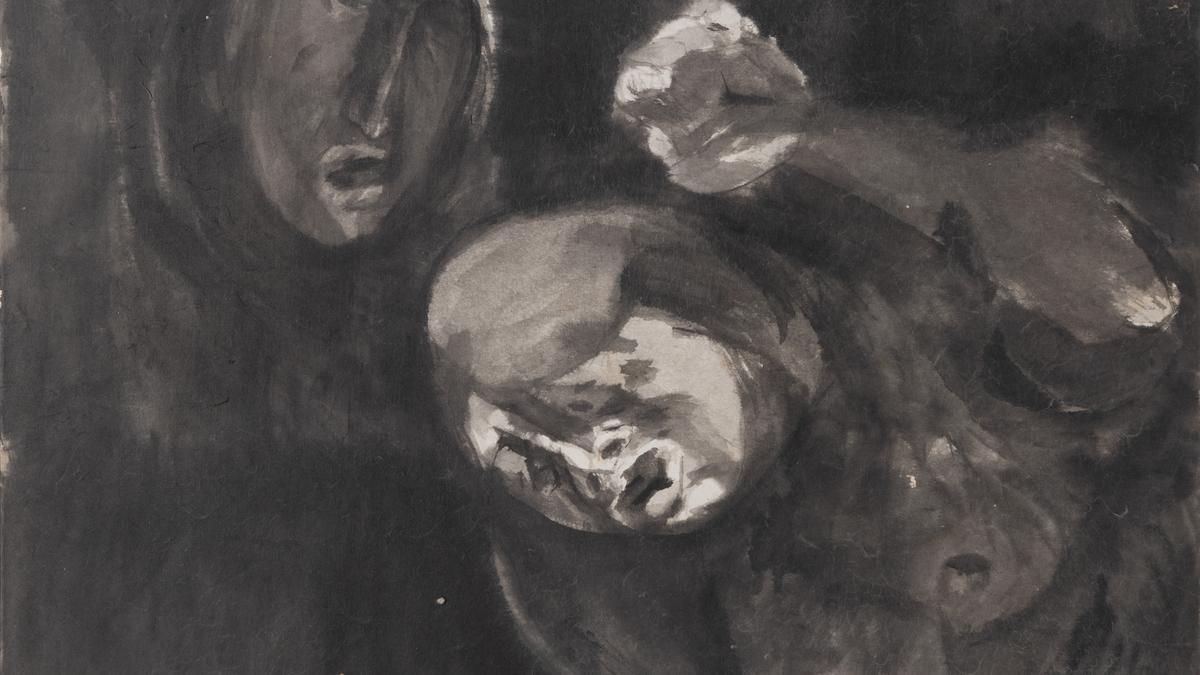
At the Kiran Nadar Museum of Art in New Delhi, a sweeping new exhibition revisits the restless, searching mind of one of India’s most powerful modernists. Tyeb Mehta: Bearing Weight (With the Lightness of Being), till June 30, marks the birth centenary of Tyeb Mehta with one of the most comprehensive retrospectives of the artist— an exhibition that unfolds as both visual archive and emotional excavation of a singular artistic vision.
Curated by Roobina Karode, chief curator of KNMA, and presented in collaboration with the Tyeb Mehta Foundation and the Saffronart Foundation, the exhibition gathers more than 120 works spanning paintings, drawings, sculptures, film and archival material. The show expands on a prelude presented at Art Mumbai 2025 but grows in scale and ambition in Delhi, offering a far deeper introspection into Mehta’s life and works.
“Mehta’s unique language in painting elegantly addressed the contradictory forces of life and arrived at a vocabulary distinctly his own,” says Kiran Nadar, founder and chairperson, KNMA.
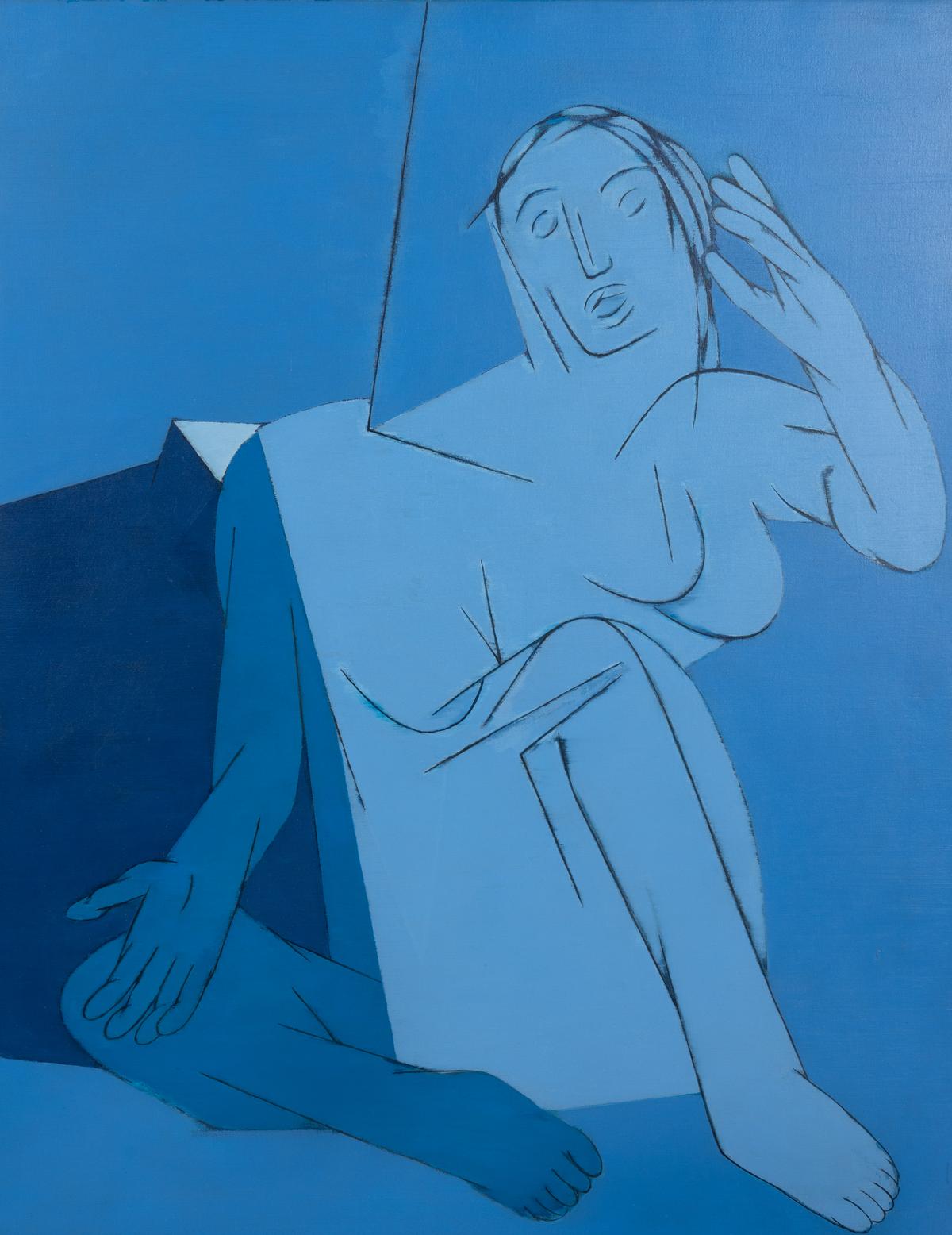
Few artists in India forged a visual vocabulary as stark and emotionally charged as Mehta’s. He distilled human anguish, violence and existential struggle into pared-down, arresting forms. His canvases are marked by dramatic tension, bold colour fields and stark figures.
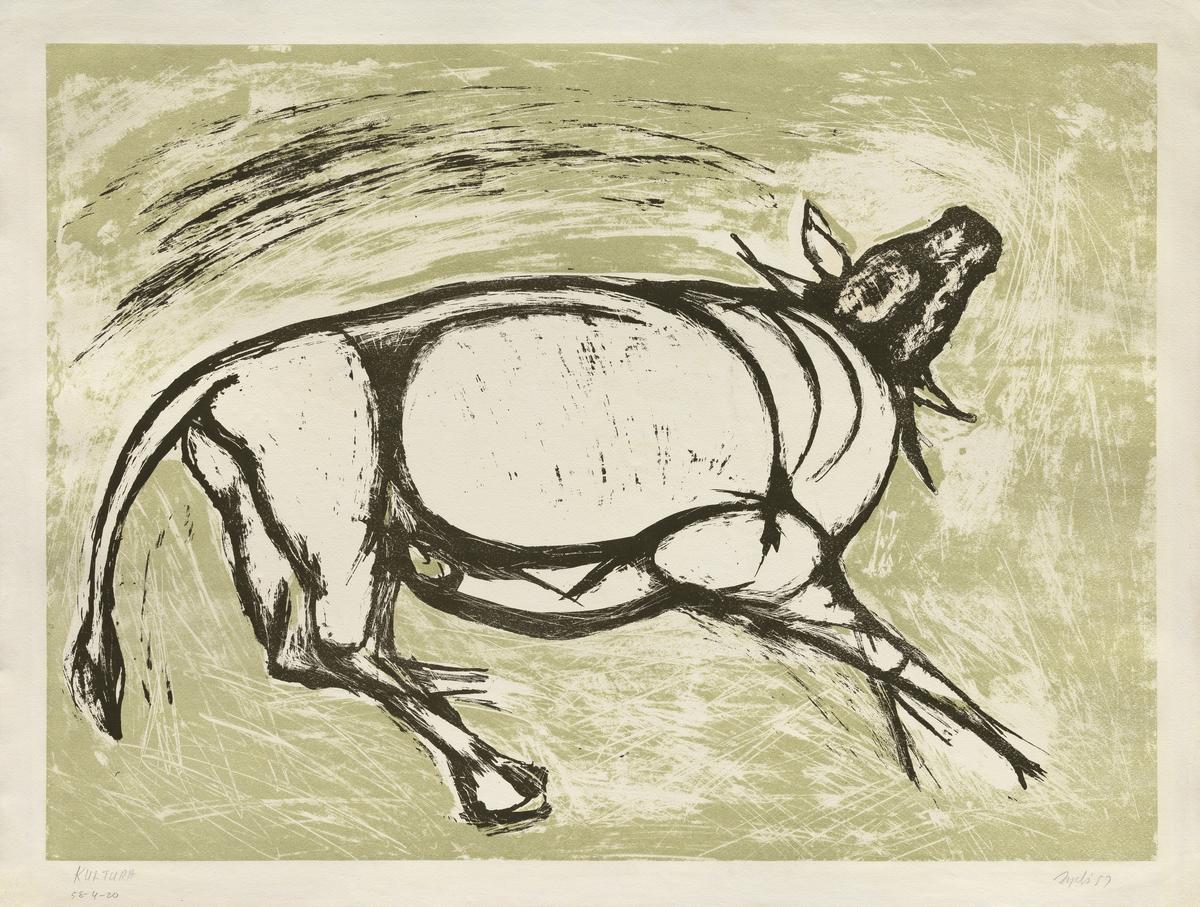
The exhibition revisits many of the motifs that defined his oeuvre. The iconic Falling Figure and Falling Bird series, for instance, capture bodies frozen in the act of collapse — images that echo the trauma and instability of a society emerging from the upheaval of the Partition. The recurring image of the bull, another central motif in Mehta’s work, carries an equally visceral charge. The artist first began sketching bulls while observing animals at the Bandra abattoir in Bombay during the 1950s, and the motif became what he once described as a “compulsive image,” appearing in his paintings across decades.
Equally powerful are Mehta’s mythological interpretations. In works such as Mahishasura and Kali, he transforms familiar figures from Indian mythology into charged psychological encounters. These works demonstrate Mehta’s ability to create images that feel both ancient and startlingly contemporary.
Mehta’s journey
Born in Kapadvanj, Gujarat, in 1925, the artist’s journey was shaped by influences that extended beyond painting. His early fascination with visual storytelling began through cinema. He studied cinematography at St. Xavier’s College in Bombay and worked as an assistant film editor before eventually enrolling at the Sir JJ School of Art.
The exhibition highlights this aspect of his creative practice through the inclusion of his experimental short film Koodal (1970). The 16- minute film meditates on life and death through symbolic encounters between humans, animals and deities. Written and directed by Mehta and produced by the Films Division of India, it bagged the Filmfare Critics Award in the same year it was released (1970).
What makes this retrospective particularly absorbing, however, is the wealth of archival material that accompanies the artworks. Early sketches, personal notebooks, photographs, exhibition catalogues and invitations from across his career help situate the artist’s practice within the lived realities of his time.
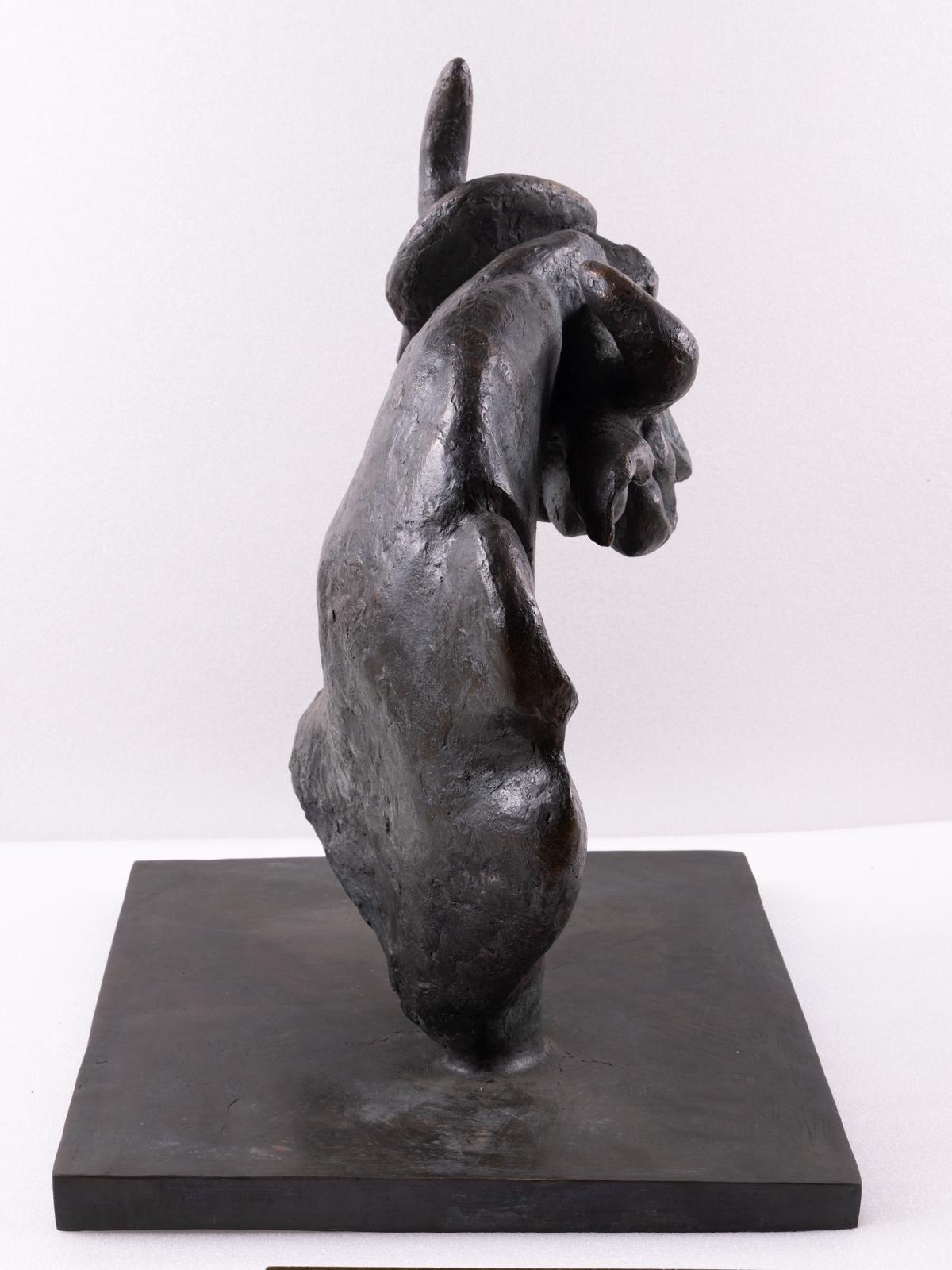
The artist once admitted that painting rarely came easily to him. He spoke of struggling at every step, destroying numerous canvases before allowing a single work to emerge. “The larger perception and dialogue on Mehta’s art has been mainly focussed on his iconic paintings,” notes Roobina. “This exhibition foregrounds the multi-dimensionality of Mehta’s creative process and the context of its emergence.”
The international trajectory
The show also traces Mehta’s international forays. After his early years in Bombay, he lived in London in the 1950s and 1960s and later travelled to New York on a Rockefeller Fellowship. Exposure to global art movements during these years further sharpened his modernist sensibility.
Today Mehta’s paintings reside in major museum collections across the world, including at the National Gallery of Modern Art in New Delhi, the Peabody Essex Museum in Massachusetts, and several prominent private collections in India and abroad.
Yet beyond the accolades and market recognition, Mehta’s enduring relevance lies in the emotional intensity and philosophical depth of his work. Tyeb Mehta: Bearing Weight (With the Lightness of Being) succeeds precisely because it reveals the breadth of that vision. By moving beyond the familiar iconic canvases and illuminating the artist’s broader creative universe, the show offers a rare peek into Mehta not simply as a celebrated painter but as a restless, searching mind.
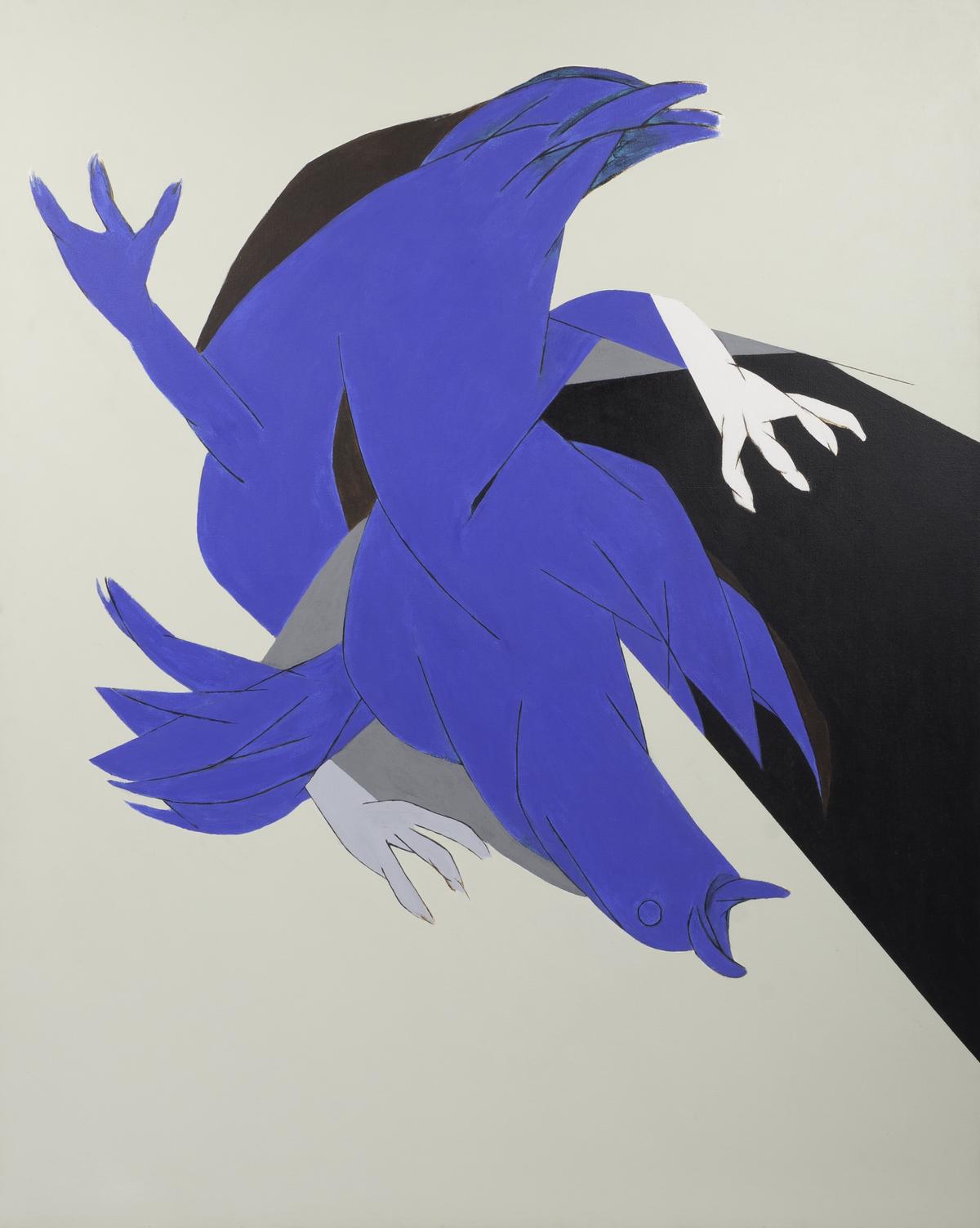
Tyeb Mehta’s Bearing Weight (With the Lightness of Being) is on at Kiran Nadar Museum of Art in New Delhi till June 30.
Published – March 30, 2026 02:46 pm IST
#weight #existence #landmark #retrospective #Tyeb #Mehta