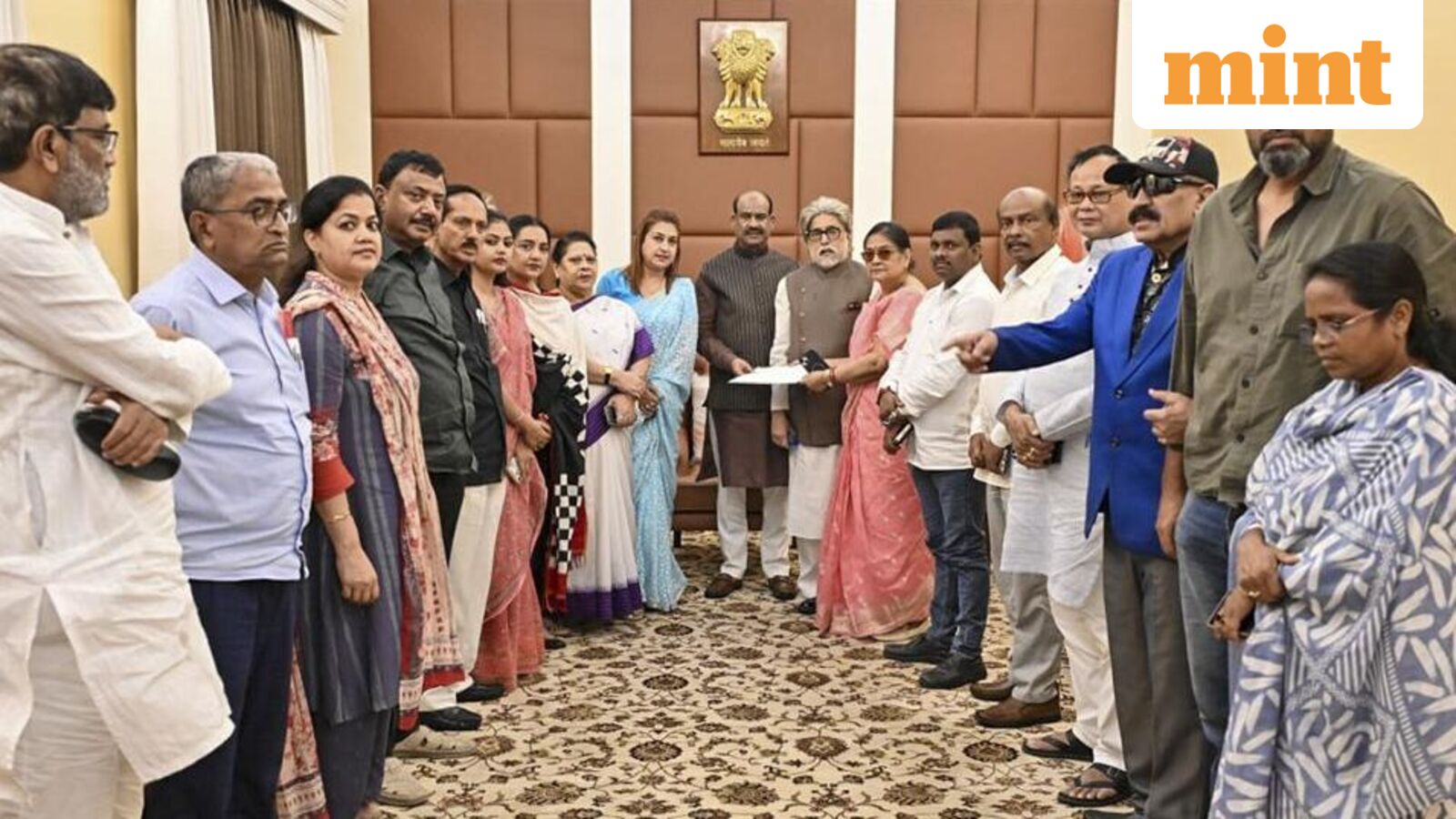
Twenty rebel Lok Sabha MPs from the Trinamool Congress (TMC) announced on Sunday that they will merge with the registered but unrecognised Nationalist Citizens Party of India (NCPI).
Rajya Sabha MP and senior advocate Kapil Sibal questioned the legality of the “merger”. He exclaimed, “The rebels of the TMC legislative party cannot merge with a political party; that can happen only if the TMC wishes to do so! Disqualify them!”
Experts Mint spoke to echoed Kapil Sibal’s observation as the “merger” with the lesser-known NCPI perplexed many.
PD Thankappan Achary, the former secretary-general of the Lok Sabha, explicitly called the merger invalid. He refused to even call it a “merger”.
Why is the merger illegal?
Achary explained that MPs or MLAs’ merger with another party by breaking away from their original party is invalid, even if they do so with the support of 2/3 of the legislative bloc.
All the members/MPs elected on a party ticket form the legislature party. The legislature party has relevance only within the Lok Sabha or the Rajya Sabha.
He said the merger would be considered valid if the original party, the TMC led by Mamata Banerjee in this case, merges with another party.
The law states that 2/3 of the legislative bloc of the original party must agree to the merger. Only then would MPs be protected from disqualification.
“The merger has to take place between two political parties, not MPs or MLAs,” Achary said, adding that if 2/3rd of the MPs agree to the merger, then they will get exemption from the disqualification.
If they disagree, they can form a “separate bloc” and approach the Election Commission to seek a different symbol, the former secretary-general of the Lok Sabha said. This “separate bloc” is liable for disqualification, as per the law.
Once an MP or a group of MPs declares they are a separate bloc, they have defected from the party.
What the law says
Under the Anti-Defection Law or the Tenth Schedule of the Constitution, a merger is legal only if the original political party decides to merge with another political party.
In this case, Mamata Banerjee’s Trinamool Congress is the “original political party.”
The role of MPs and MLAs is restricted. They can either agree to or oppose the merger. They can’t act independently and switch political loyalties.
The Tenth Schedule states, “A member of a House shall not be disqualified…where his original political party merges with another political party, and he claims that he and any other members of his original political party-
(a) have become members of such other political party or, as the case may be, of a new political party formed by such merger; or
(b) have not accepted the merger and opted to function as a separate group.”
The law adds that, “…the merger of the original political party of a Member of a House shall be deemed to have taken place if, and only if, not less than two-thirds of the members of the legislature party concerned have agreed to such merger.”
Can TMC rebels be disqualified?
TMC rebels are likely to be disqualified if the TMC faction led by Mamata Banerjee (the original party) files a petition seeking their disqualification, Achary said.
Disqualification on ground of defection
As per the Anti-Defection Law, a member of a House belonging to any political party shall be disqualified for being a member of the House-
1. If he/she has voluntarily given up his membership of such a political party
2. If he votes or abstains from voting in the House contrary to any direction issued by the political party to which he belongs, without obtaining the prior permission of such political party, person or authority.
3. Moreover, an elected member of a House shall be disqualified for being a member of the House if he joins any political party after such election.
#Making #sense #TMC #rebels #merger #NCPI #legal #Expert #explains #law