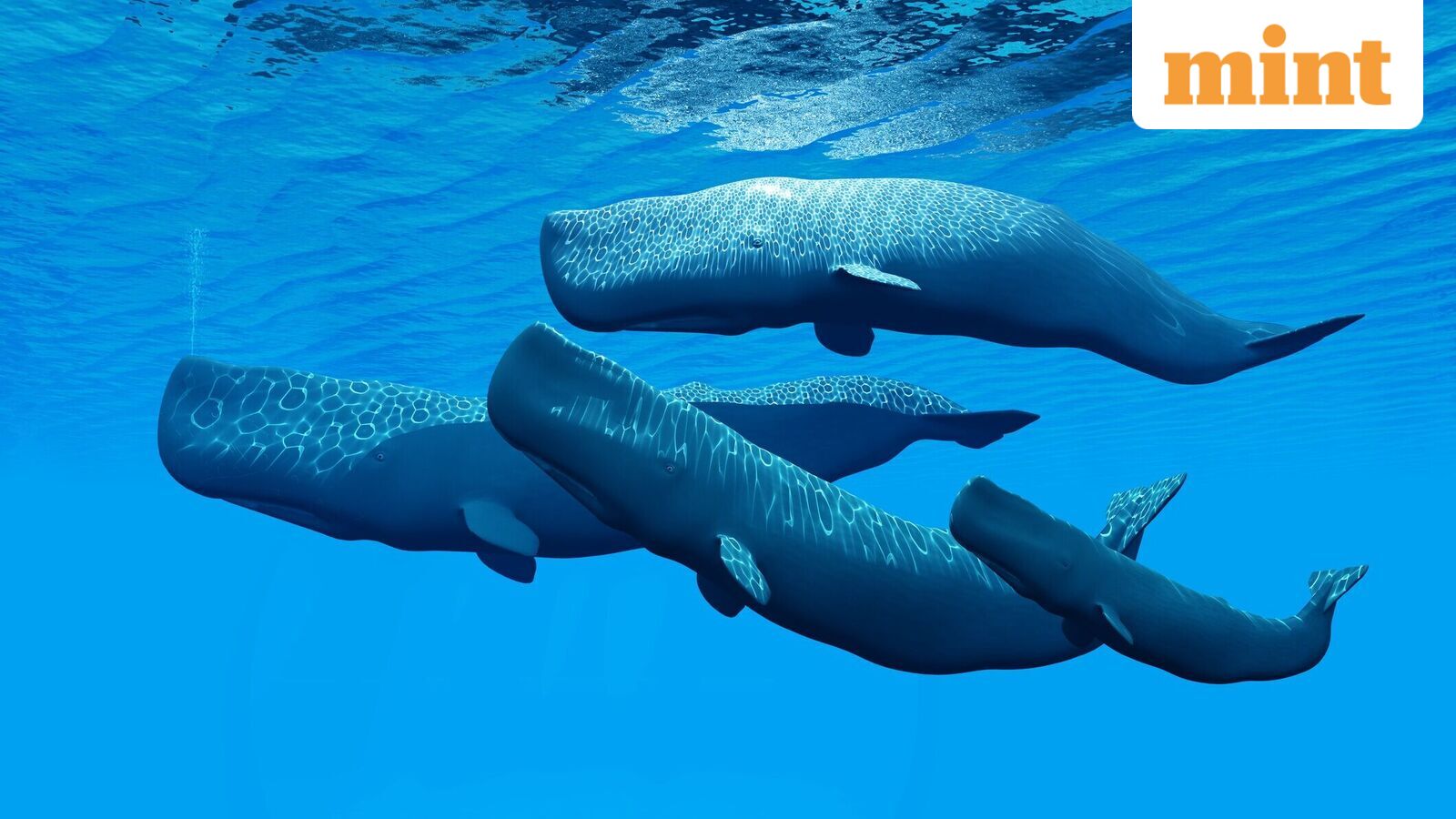
Ambergris is a waxy substance produced by sperm whales to protect their digestive tract from indigestible debris. Once expelled, it floats to the surface, washing up as flotsam on beaches around the world. Ambergris also happens to be highly effective at stabilizing volatile perfume notes, significantly extending how long they remain active on human skin. As a result, it became one of the most sought-after substances in the fragrance industry.
As its commercial value grew, demand for this rare biological substance increased to the point where it cost $10,000 per pound. Rather than waiting for chance discoveries of ambergris, whalers began hunting sperm whales, killing a countless number in the process. Since only one in every 100 sperm whales has ambergris, this became one of the most wasteful—and cruel—objectives of the whaling industry.
For centuries, we have extracted rare and exotic compounds from animals for human use. The triumphal robes of victorious Roman generals were dyed in Tyrian purple, a pigment so rare it took 10,000 Mediterranean snails to produce a single gram. When we learnt that diabetes mellitus could be treated with insulin, we extracted this hormone from pig pancreas—killing 23,000 pigs to produce just a single pound.
In retrospect, it is hard to see bio-farming as anything but cruel and wasteful. But it was only after international moratoriums were imposed that trends began to reverse. It’s now almost impossible to source natural ambergris for large-scale commercial use and the perfumery industry has turned to synthetic alternatives, just as the medical industry has for insulin.
But despite these advances, many industries still rely on animal-derived substances—because of molecular complexity, regulatory obstacles or the perceived superiority of natural products in some applications.
Each year, the blood of nearly half a million Atlantic horseshoe crabs is harvested to test for bacterial endotoxins. Since the crab’s blue blood has a protein that clots instantly when it comes in contact with bacterial endotoxins, it remains our most reliable way to ensure the safety of vaccines, intravenous fluids and implantable medical devices. The production of antivenoms for snake, scorpion and spider bites still requires ‘milking’ venom from live animals and injecting it into horses or sheep to harvest antibodies—a dangerous, slow and expensive process.
Beyond ethical concerns, animal biofarming also poses significant health and environmental risks. The production, storage and consumption of animal-sourced products risk the spread of infectious diseases, which no biosecurity system or containment measures can definitively prevent. The environmental cost of raising, feeding and maintaining animals solely to harvest a single molecule or organ is becoming increasingly difficult to justify. The question is not whether we should quit extractive biofarming, but why our systems remain structured around it at all.
While advances in recombinant DNA technology and industrial bioprocessing have enabled the mass production of some biological molecules, many of the most valuable compounds—particularly those involved in immune response and toxicology—have proven difficult to replicate. Their three-dimensional structures are complex, their binding behaviours subtle and their effectiveness often depends on interactions that remain poorly understood. In practice, the biological machinery of animals has continued to outperform our best attempts at imitating them.
In a recent paper, scientists described a radically different approach. By using generative artificial intelligence (AI), they were able to design synthetic antivenom proteins from scratch. Rather than harvesting antibodies from animals, they used an AI system called RFdiffusion to generate entirely novel protein ‘binders’ whose shapes were engineered to precisely match specific venom toxins they were targeting. These binders act like molecular caps, attaching tightly to the venom toxins and preventing them from docking onto human cells.
The results were striking. In laboratory tests, these synthetic binders successfully neutralized the toxic effects of black-necked spitting cobra venom on human cells even when introduced after exposure. In live animal tests, mice survived doses that would have otherwise been fatal. Most importantly, since these binders were highly specific, they narrowly targeted venom toxins without triggering a broader immune response.
The significance of this experiment extends well beyond snakebite treatment. It demonstrates that computational systems can now reliably produce what we once depended on living organisms to provide us. Advances such as these are making it possible to replace traditional biofarming with specifically designed alternatives. Because these molecules are engineered from scratch, they can be made to be more stable than their animal counterparts, reducing the need for cold chains and easing various other storage constraints.
For centuries, we have extracted molecules from animals, treating our fauna as a resource to be mined. Computational biology offers a fundamentally different paradigm—one in which value comes not from chance discovery, but from deliberate design. This shift is not technological, but conceptual. Instead of foraging for what nature happens to produce, we can deliberately build what we actually need.
The author is a partner at Trilegal and the author of ‘The Third Way: India’s Revolutionary Approach to Data Governance’. His X handle is @matthan.
#practice #treating #animals #resource #scarce #substances