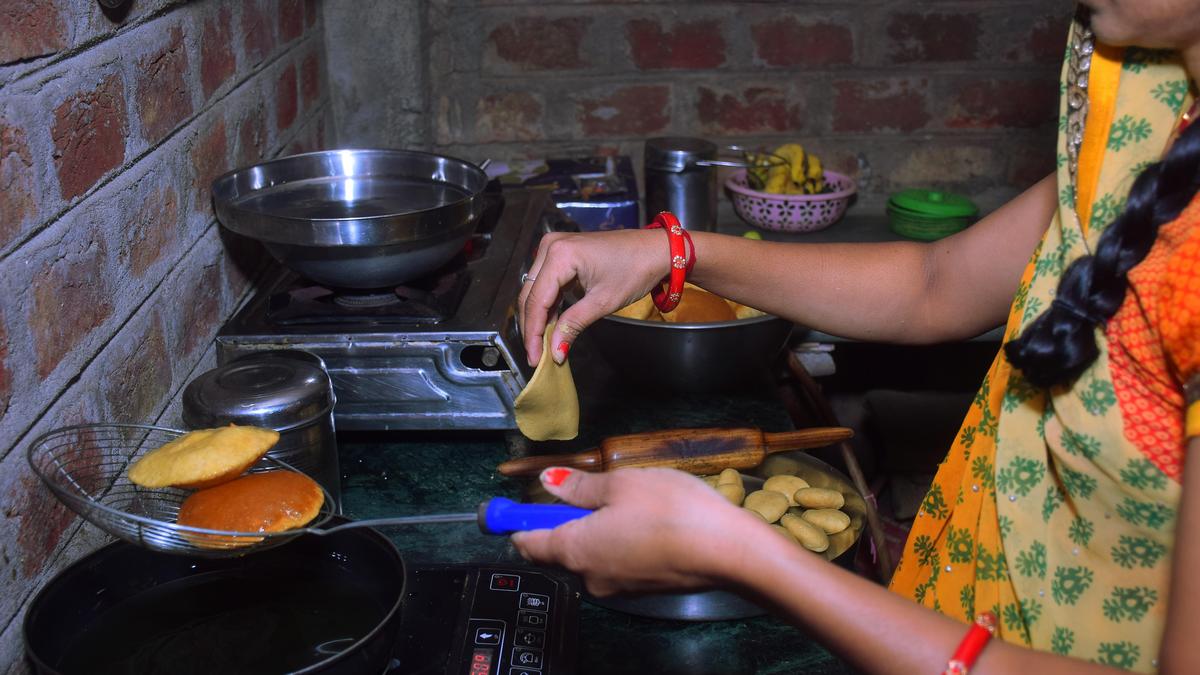
For 79-year-old Jaya Sundararajan, life did not come to a halt when her regular food supplier said he could no longer deliver lunch because of the LPG shortage. With the help of her domestic worker, she bought some vegetables and returned to cooking her own meals.
“I don’t depend on an LPG gas stove,” she says with a smile. “I’m used to a steam cooker where I can stack stainless steel containers and cook rice, vegetables and dal all at once.” The method, she adds, is not only efficient but also convenient. “The food tastes better and there are fewer vessels to wash.” To supplement this, she also uses an induction stove to boil milk and heat water, further reducing her dependence on LPG.
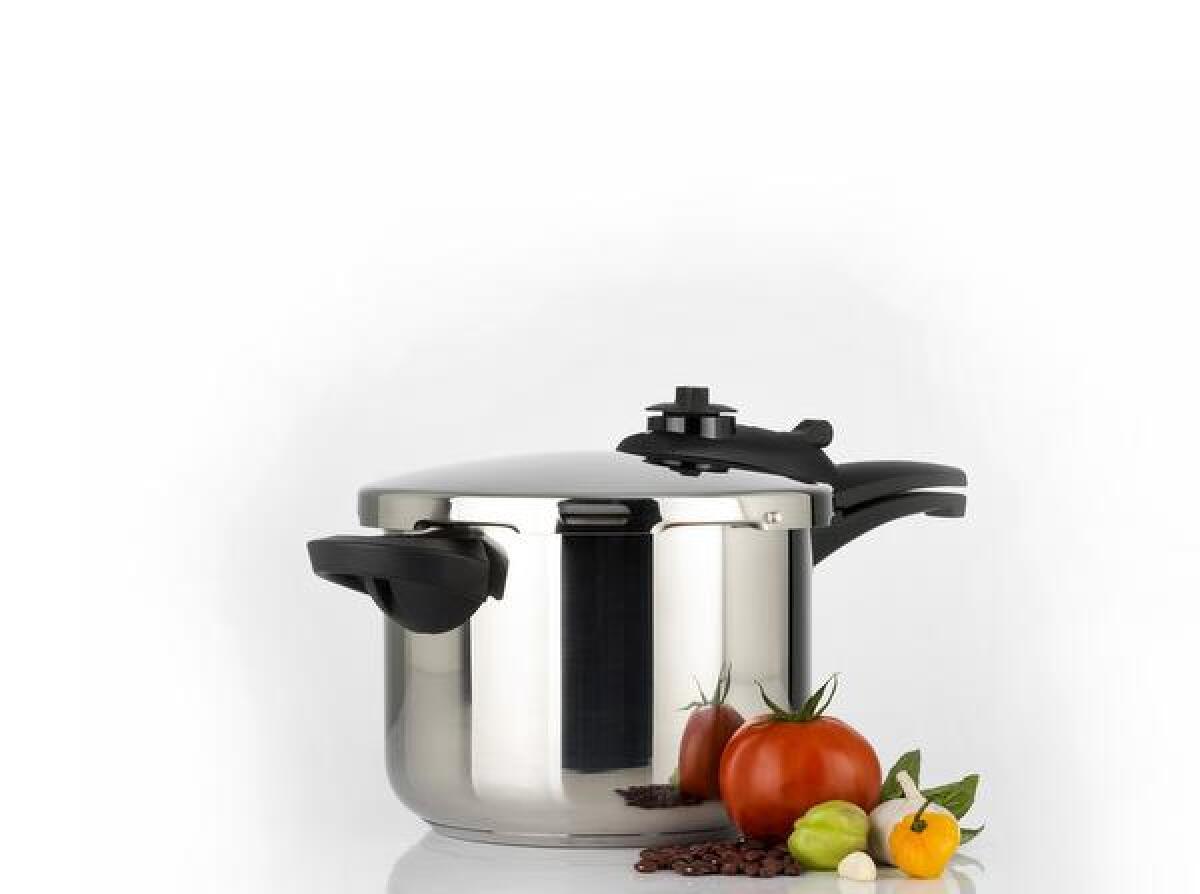
Cooking in a pressure cooker reduces the time
Families are rediscovering smart kitchen habits, hacks and practical tips to cook traditional South Indian meals more efficiently. Many households are now adopting hybrid kitchens, where LPG stoves are used alongside electric appliances such as microwaves, air fryers and induction stoves.
Cookbook author Sabita Radhakrishna says the current situation reminds her of her early days as a newly-married bride in the 1960s. “LPG was a rather new concept in those days, and we would receive only one cylinder, which would last for two to three months, and then book a refill and wait for it to be delivered.. So I would focus on saving the fuel so that it would last many days,” she reminisces.
Today, she notes, Indian kitchens are far better equipped with modern electrical appliances that help speed up cooking. “In a hybrid kitchen, we can use the microwave to cook vegetables for a stir-fry and then transfer them to the air fryer to grill or crisp them. Electric rice cookers also come in handy to prepare rice, ven pongal, dal khichdi, vegetable biryani and stew,” she says.
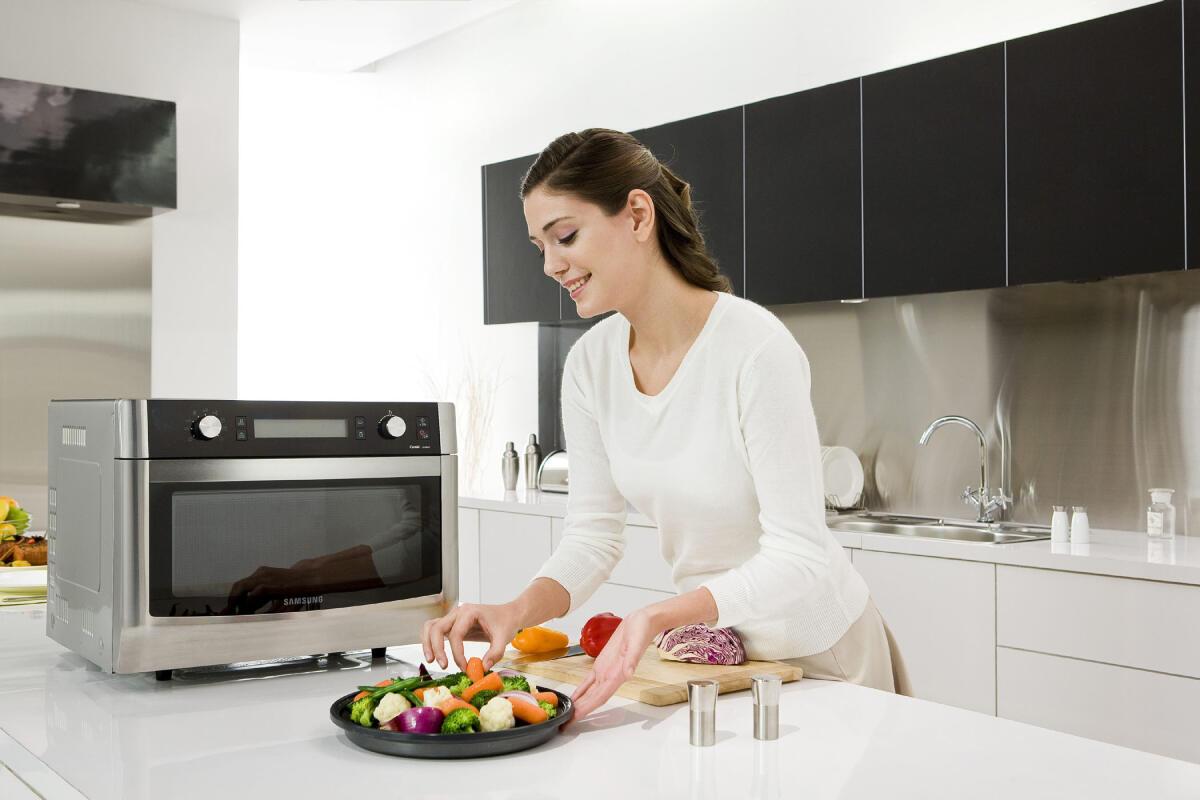
In a hybrid kitchen, we can use the microwave to cook vegetables for a stir-fry and then transfer them to the air fryer to grill or crisp them
Sabita says she is particularly fond of her electric pressure cooker, which allows her to sauté, fry, steam, cook and even roast without needing multiple vessels. “This is the time to bring out our podis, thokkus and pickles, and make the most of it to conserve fuel. Thogayals are also ideal, as they can be prepared in a jiffy. One-pot dishes such as sambar rice and rasam rice take very little time when cooked in a pressure cooker on an induction stove,” she says. She also suggests occasionally moving away from traditional staples. “Instead of making idli or dosa, one could try toasted sandwiches using electric toasters or porridge made with millets. And there is no need to hesitate about eating leftovers,” she adds.

Food blogger Aarthi Satheesh says batch cooking can significantly reduce LPG use in the kitchen. She often pressure-cooks legumes such as channa, rajma and lobia in advance, freezes and later uses it to prepare meals for her two school-going children. “To conserve LPG, we can make judicious use of the microwave to cook vegetables. Toor and moong dal can be pressure-cooked in bulk on an induction stove, stored in the freezer, and later used to prepare sambar or kootu,” she says.
She also suggests preparing certain gravies in larger quantities. “Tamarind-based gravies such as puli kuzhambu and rasam can be cooked in bulk, stored in the refrigerator, and used over a couple of days,” says Aarthi. Even spice powders can be prepared efficiently. “To prepare moringa or curry leaf podi, spread the ingredients on a plate and oven-roast them for about 15 minutes at 180°C. Once cooled, grind them into a coarse powder. Mixed with rice, it makes a nutritious meal,” she adds.
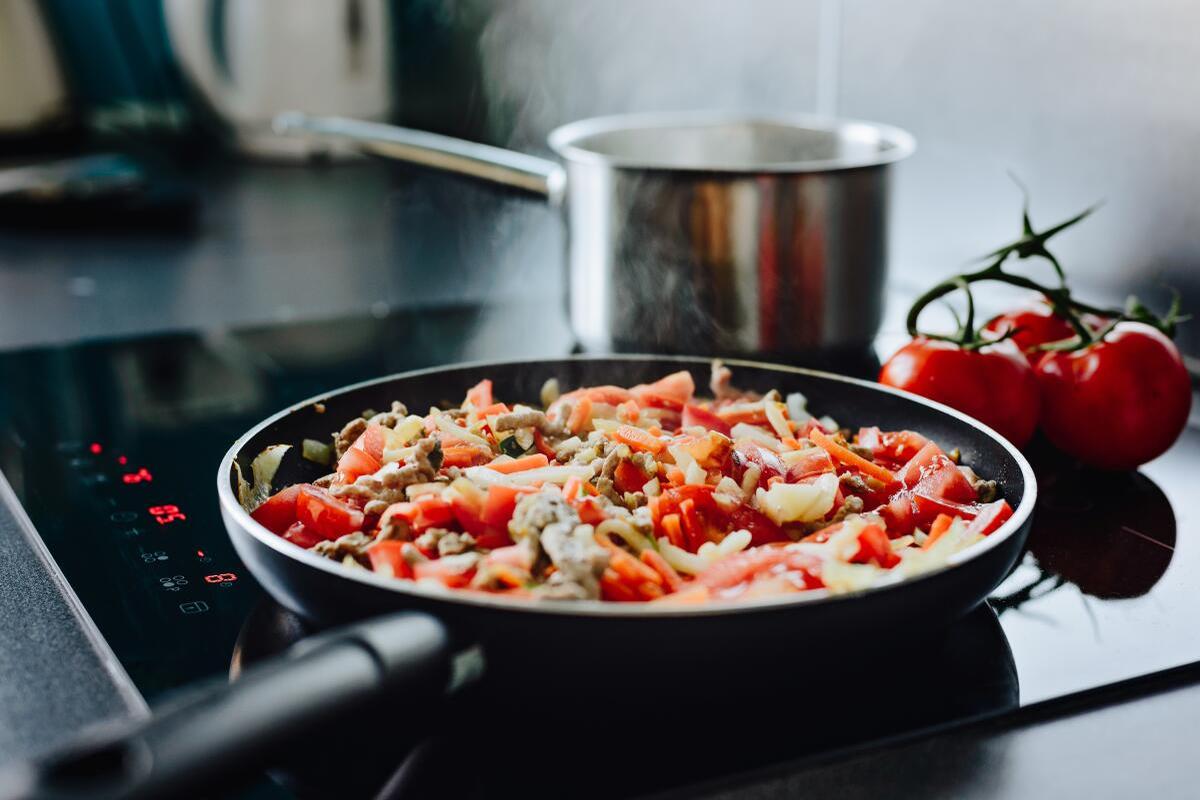
The transition to electric cooking may not be easy for everyone
However, the transition to electric cooking may not be easy for everyone.
Mallika Badrinath says the current situation is particularly challenging for lower-income households. Many may not be able to afford induction stoves, and even if they do, they must also invest in induction-compatible cookware. “While many urban kitchens today are hybrid spaces with multiple electrical appliances, low-income families often have to cope by simply minimising their LPG use, especially as the cost has skyrocketed,” she says.
She emphasises that reducing cooking time requires careful planning. “Keeping ingredients ready and cutting vegetables in advance can make a big difference. I even prepare the thalippu (tempering) ahead of time, store it in glass bottles, and add it to the dish towards the end. This saves a significant amount of time,” she explains. Switching to traditional summer foods can also help, she adds. “Dishes such as ragi and kambu koozh, as well as gravies made with tamarind, are ideal. They keep well in warm weather and do not spoil quickly.”

Food writer Krish Ashok author of Masala Lab: The Science of Indian Cooking believes the current situation offers an opportunity for households to rethink their dependence on LPG and consider alternatives such as induction cooking. He says the shift should not be seen as elitist.
“Induction cooking can actually be cheaper than LPG. Basic induction stoves are available for around ₹2,000, and governments could even consider offering them at subsidised rates.” According to him, induction cooking may be particularly beneficial for lower-income households. “In my calculation, using an induction stove for about three hours a day would cost roughly ₹200 a month. When you compare that with the cost of LPG, it can work out to be far more economical,” he says.
Ashok also points out that the situation could encourage healthier cooking habits. “Cooking vegetables in a microwave helps retain their micronutrients, and there is nothing wrong with cooking in bulk, reheating food from the fridge and consuming it. This not only saves LPG but also saves one’s energy and time spent cooking,” he notes. “Behavioural changes like these can help us adapt to electrical appliances and gradually reduce our dependence on LPG. This could be the right moment to make that shift,” he says.
Chef Jugesh Arora, director, Chef’s Table Studio, who designs hotel kitchens across the globe, says switching to induction cooking is one of the most practical solutions as it generates less heat and keeps the cooking environment cooler. Apart from being efficient, it is also more environmentally friendly, producing less carbon compared to LPG.
Speaking about a recent project, he says that at the Fairmont Mumbai, a five-star property with 560 rooms and one of the largest banquet facilities in Asia — the hotel has invested nearly ₹70 crore in its kitchen infrastructure. “The kitchen is equipped with imported industrial induction stoves, and our chefs are trained to handle them to prepare all dishes seamlessly. It is safe, immensely efficient and helps keep the kitchen temperature comfortable,” he says.

Chef Jugesh adds that in the current situation, the hotel has also adjusted its service model. “We have temporarily stopped buffet service and are offering only à la carte meals, with a trimmed menu that retains the most frequently ordered dishes.”
For home kitchens, he believes the pressure cooker remains indispensable.“The pressure cooker is the king in domestic kitchens. You can cook two or three items at once, whether on LPG or induction,” he says, adding that investing in an induction stove and good-quality cookware is worthwhile. “These vessels are also easier to clean, which helps conserve water.”
“We are dealing with a national issue, and everyone needs to contribute responsibly,” he says. “By shifting towards induction cooking, we can conserve LPG now and in the future. Ideally, households could aim to use induction for about 90% of their cooking and LPG for the remaining 10%.”
#Hybrid #kitchens #families #cooking #LPG