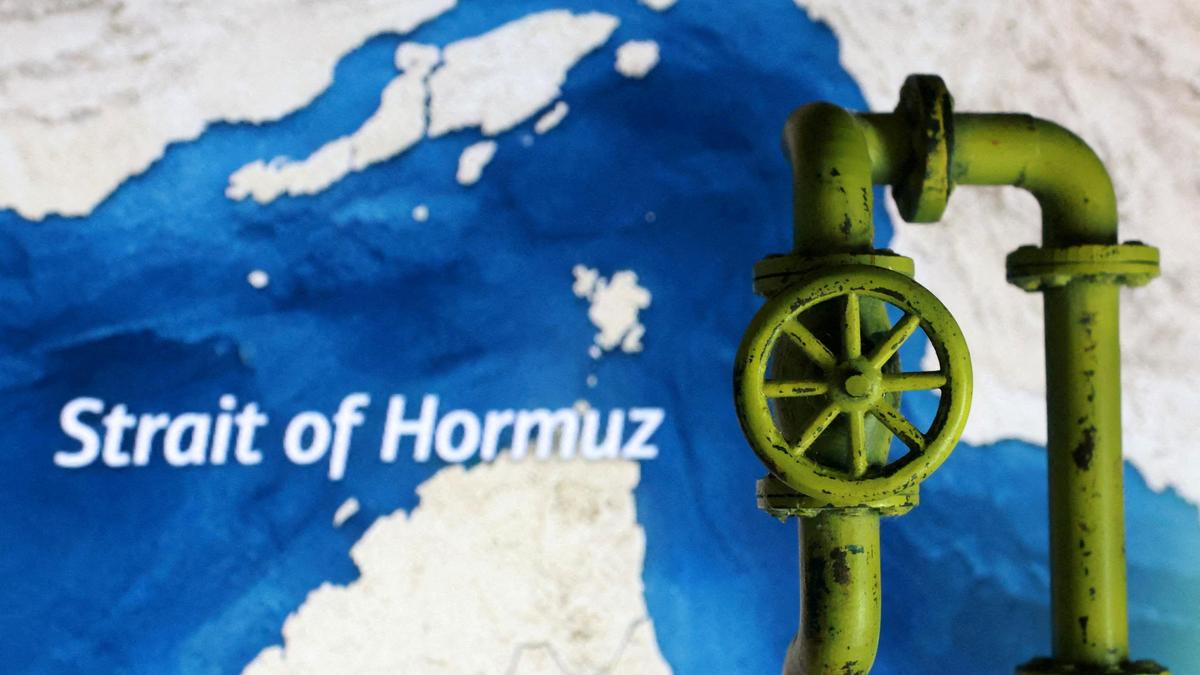
FILE PHOTO: A map showing the Strait of Hormuz and a 3D printed oil pipeline are seen in this illustration.
| Photo Credit: Dado Ruvic
Hours after the U.S. and Iran declared a 14-day ceasefire early on Wednesday (April 8, 2026), there was a spurt in marine activity near the Strait of Hormuz. While ship owners and charterers were preparing for a quick exit, they were also looking for more clarity on the terms and conditions for such a transit given the indications that Iran still exercises de-facto control over the strait.
Iran says safe passage will involve its armed forces and there are “technical limitations” though the U.S. President has talked about “complete, immediate safe opening.” Secretary-General of the International Maritime Organization, Arsenio Dominguez, has said that he is working with relevant parties to implement an appropriate mechanism to ensure the safe transit of ships through the strait.
Hundreds of ships are stranded west of Persian Gulf, fearing attacks and damage to cargo, vessel structure and lives of seafarers. Among them were some 35 ships, either Indian-flagged or foreign flagged carrying cargo for India. Nearly 22 energy-critical vessels were marked for evacuation with Indian naval assistance. This included three LNG carriers, 12 LPG carriers and seven crude oil tankers. Eight Indian flagged LPG carriers have crossed the strait and come to India since then.
Published – April 08, 2026 09:29 pm IST
#Iran #control #strait #shippers #seek #clarity #transiting