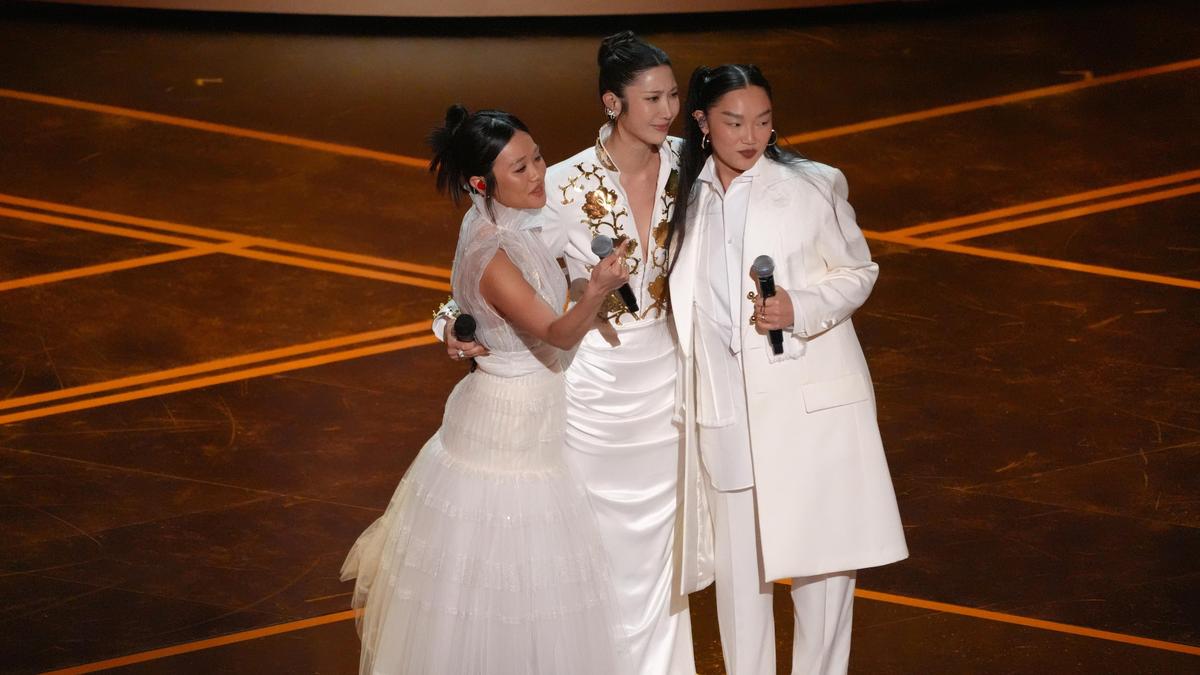
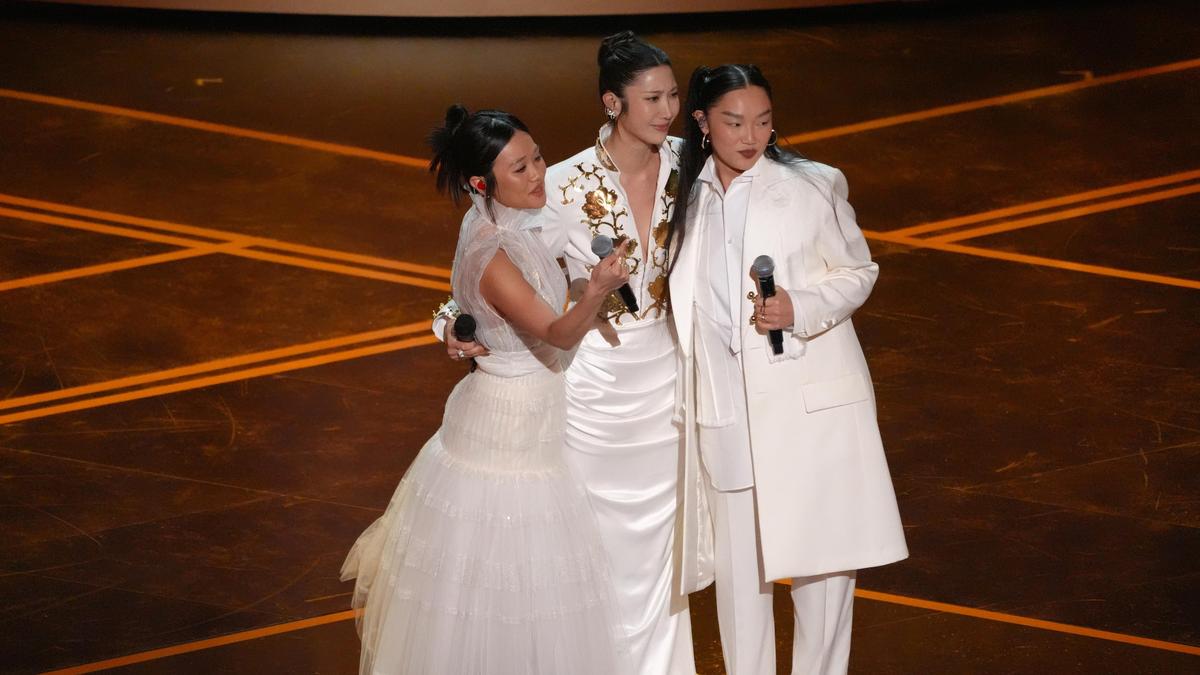
Rei Ami, EJAE, and Audrey Nuna at the Oscars.
| Photo Credit: AP
The Academy Awards rarely intersect with the world of Korean pop music. This year, however, that boundary shifted decisively when “Golden,” from K-Pop Demon Hunters, won the Oscar for Best Original Song, becoming the first K-pop track to receive the honour.

At first glance, the pairing feels unusual. The Oscars have traditionally celebrated film music rooted in Broadway-style ballads, orchestral themes or singer-songwriter compositions. A contemporary Korean pop track emerging from an animated fantasy about idol-heroes is not the most predictable addition to that lineage. Yet the trajectory of “Golden” suggests how dramatically the global music landscape has changed.
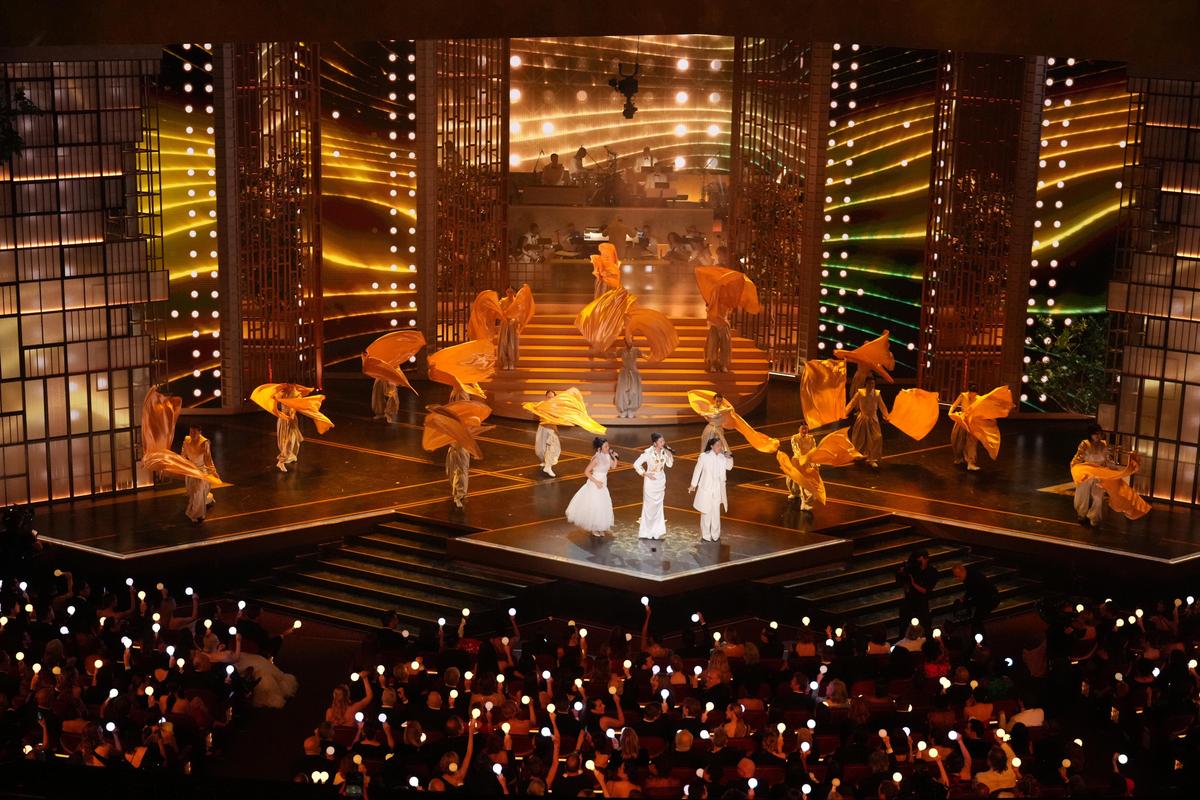
Rei Ami, from left, EJAE, and Audrey Nuna perform ‘Golden’ from KPop Demon Hunters during the Oscars.
| Photo Credit:
AP
In KPop Demon Hunters, the song arrives at the emotional centre of the film. Directed by Maggie Kang and Chris Appelhans, the animated musical follows three globally adored idols who secretly defend the world from supernatural forces. Publicly, they perform as the chart-topping girl group Huntrix. Privately, they wage a battle against demons threatening humanity. The premise carries the heightened energy of pop spectacle, but it is also a story about responsibility, identity and the complicated relationship between artistes and their audiences.

“Golden” accompanies one of the film’s defining moments, when the characters confront both the weight of their secret mission and the expectations placed upon them as performers. Sung by EJAE, Audrey Nuna and Rei Ami, who provide the singing voices for the fictional trio, the track unfolds with a gradual build: restrained verses give way to a chorus that expands outward with cinematic scale. Its lyrics move fluidly between English and Korean, reflecting the linguistic hybridity that has become increasingly common with contemporary K-pop.
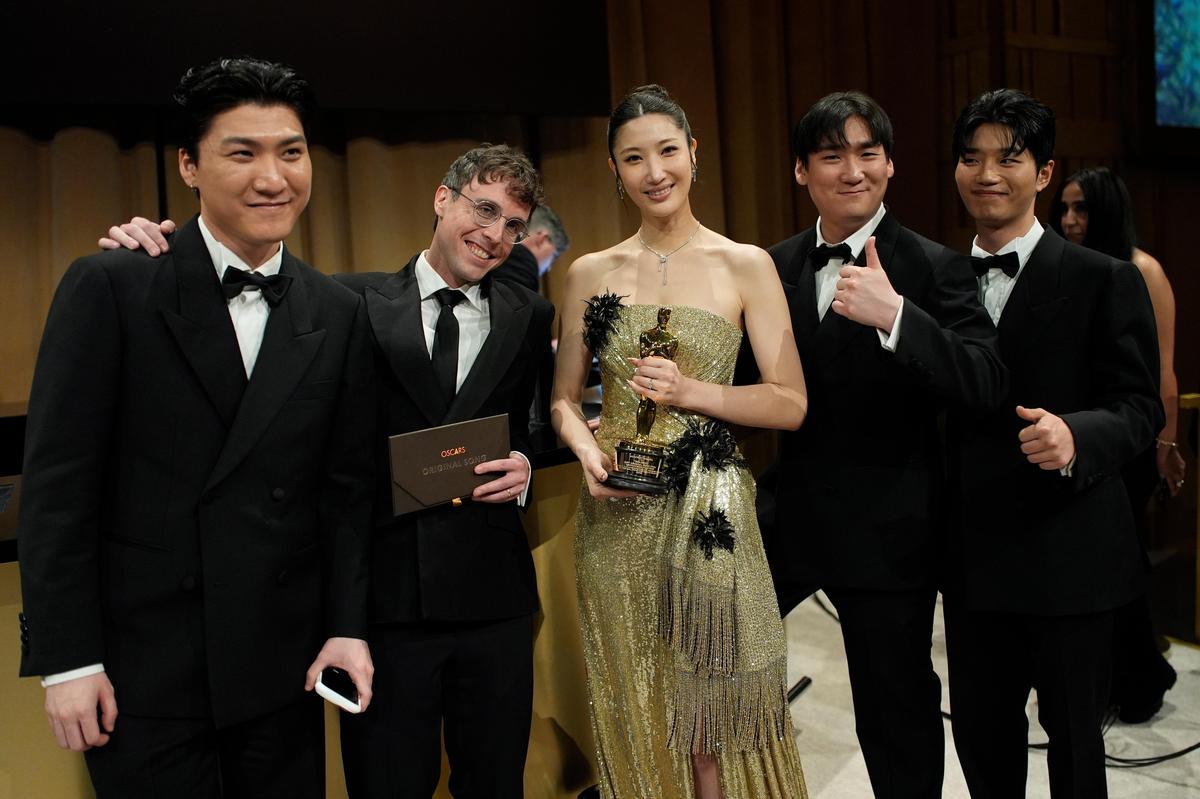
EJAE with the team behind the song.
| Photo Credit:
John Locher
The creative team behind the song reflects a similarly international collaboration. EJAE wrote the track alongside Mark Sonnenblick and a group of Korean composers and lyricists that includes Teddy Park, a producer whose influence on modern Korean pop is difficult to overstate. Park’s involvement lends the song a sonic lineage that traces back through two decades of the genre’s evolution, even as the track functions within the narrative framework of a film musical.
Outside the film, “Golden” quickly proved capable of standing on its own. The track entered the Billboard Hot 100 and gained traction across global streaming platforms, suggesting that its appeal extended beyond the context of the movie. Like many successful K-pop releases, the song thrives on a combination of melodic immediacy, polished production and performance-driven energy.

Its awards trajectory has been equally remarkable. Earlier this year, “Golden” won Best Song Written for Visual Media at the Grammy Awards, becoming the first K-pop song to secure a Grammy. Within months, the track added an Oscar to that list, marking a rare moment when both the music and film industries converged in recognising the same piece of work.
The Oscars ceremony itself reflected that convergence. The live performance of “Golden” brought tightly choreographed staging and dramatic visual design to the Academy’s stage, briefly transforming the awards show into something resembling a K-pop concert. It was a striking contrast to the restrained performances that often define the category.
The success of the song also arrives within the wider context of the Korean Wave or Hallyu, which has steadily reshaped global entertainment. Korean cinema, television dramas and pop music have all expanded far beyond their original audiences over the past decade. Films such as Parasite demonstrated that Korean storytelling could command the highest honours in cinema, while K-pop artistes have cultivated fan communities that span continents.

For K-pop, the moment feels less like a sudden breakthrough than the formal recognition of something that has been unfolding for years. The audience was already global. The awards, it seems, are finally beginning to reflect that reality.
Published – March 16, 2026 05:39 pm IST
#Kpop #song #Golden #history #Oscars