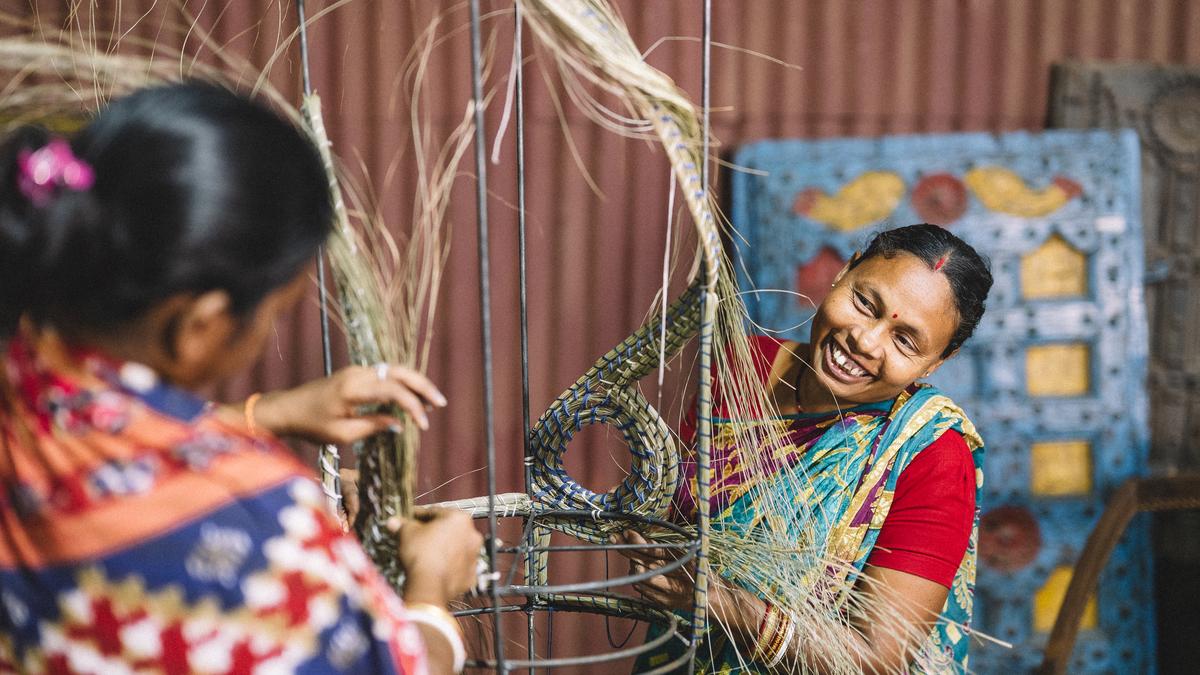
The Niraba (meaning quiet strength in Odia) collection reimagines grass on grain.
Shining a spotlight on Indian artisans, with a craft collaboration across the east and west coasts of India, the Niraba (meaning quiet strength in Odia) collection reimagines grass on grain. An artisan-led initiative between Boito, an Odisha-based slow fashion brand, and Ahmedabad-based design studio This and That, sabai grass weaving and dhokra craft find a worthy canvas on wardrobes, chairs, barstools, lamps, and cabinets. Showcased recently at the India Design ID 2025 in Mumbai, and at the Bougainvillea Gallery in Ahmedabad, the Niraba bed and Jyoti lamp won awards at the Elle Deco International Design Awards held last month in Mumbai.

Niraba eka wardrobe
Ariane Thakore Ginwala, founder of This and That, recalls the eventful collaboration. “Sometime in February, I stumbled upon these antique sal doors at a store in Mayurbhanj, and fell in love, so I took all 27 of them,” says Ginwala. “Meanwhile, I was in touch with Richa Maheshwari [founder of Boito] because I loved her coats [made with heirloom Odia weaving techniques ], and one thing led to another, and we decided to merge two crafts [bobei sabai weaving and dhokra metal craft along with woodcraft in Gujarat]. I conceptualised the collection in May, prototyped the furniture with my craftspeople using local grass to see if the weaving would work on wood. Then, we had to figure out logistics — move both 150 kilograms of sabai grass and the weaving cluster to our studio.”
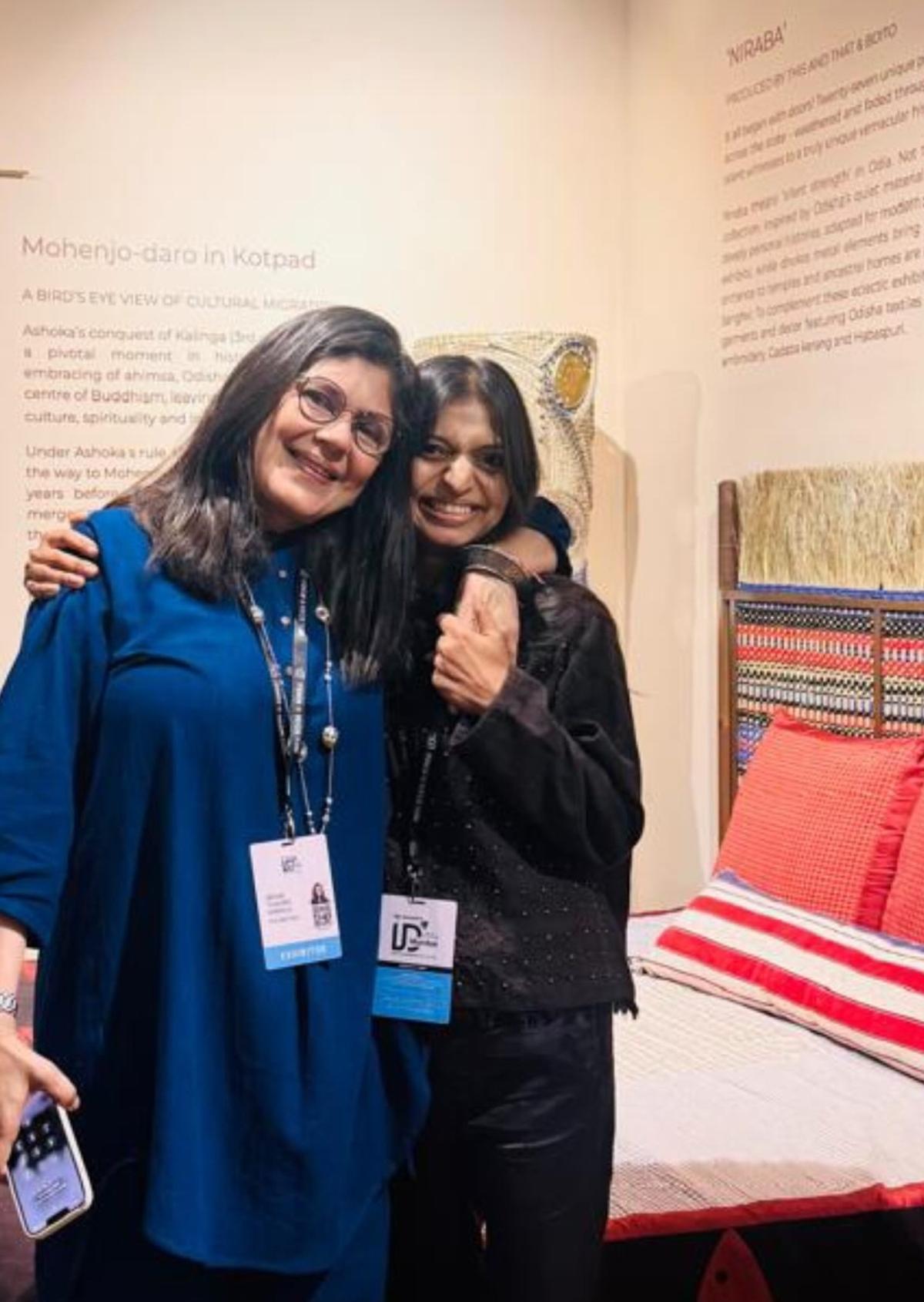
Ariane Ginwala and Richa Maheshwari.
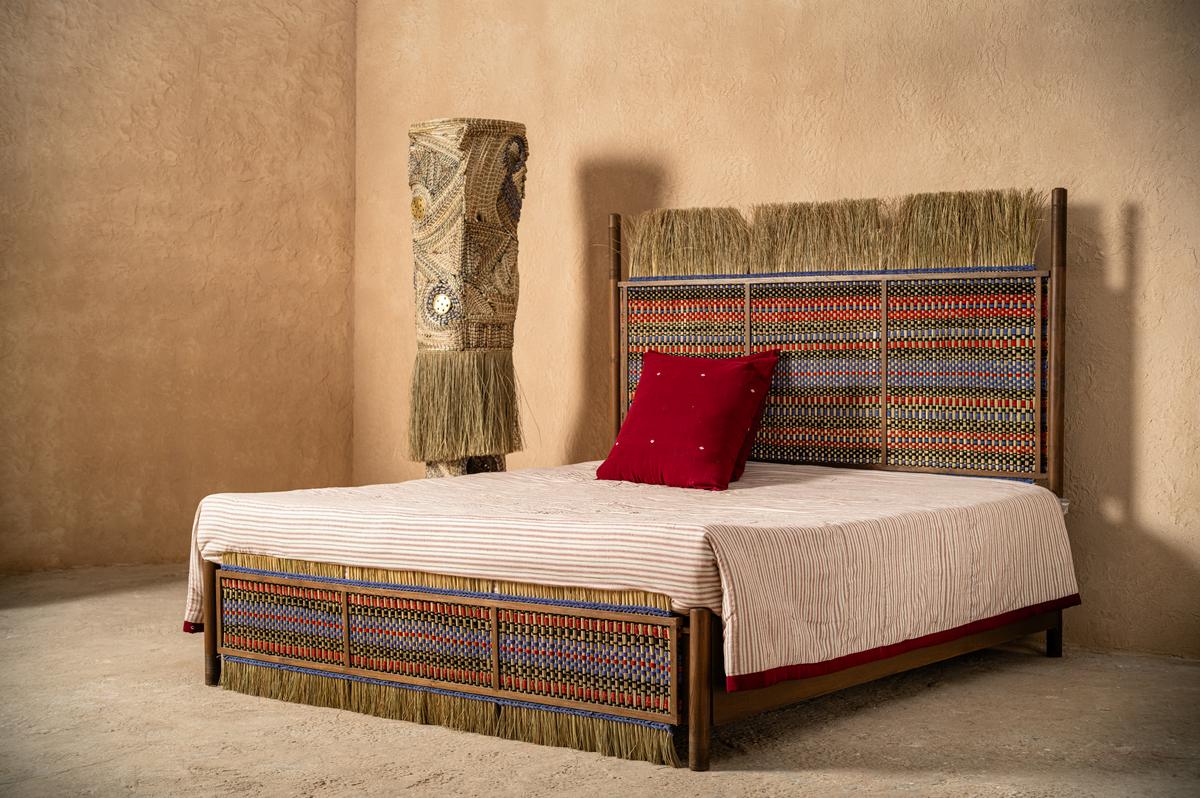
Niraba niva bed
Five female weavers from Boito, and a woodworking team in Ahmedabad fused bobei sabai grass weaving and dhokra metal craft with sculptural lighting and furniture, in just 15 days.
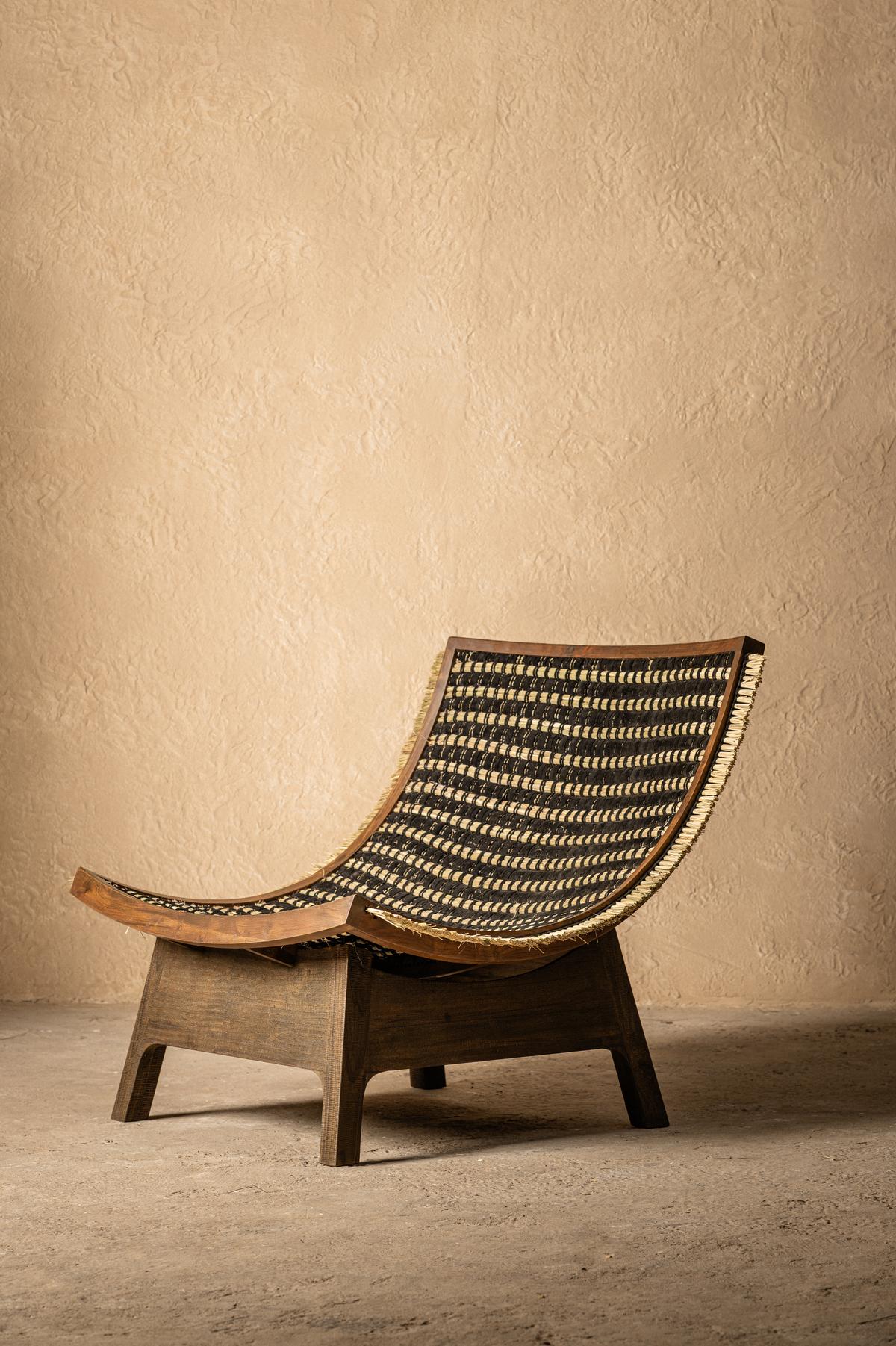
Niraba aaram chair

Ariane Ginwala (left) and Radhika Sanghvi (middle) with Odia craftswoman.
Light as a metaphor
The lighting collection conceptualised by sculptural artist Radhika Sanghvi, uses illumination as a threshold. Sanghvi explains, “I see light as a metaphor as it reveals, softens, and transforms matter into experience. With Niraba, my intent was to honour the traditions and techniques Indian craftsmen have refined for generations, while pushing their boundaries into a new aesthetic language.” The lamps (called Chhaya, Akash, Kiran, Jyoti, Prabha and Deepa), are covered in elaborate woven grass panels. For the wardrobes (Dui, Eka and Sona) and chests (Vara and Reka), clients can choose from a range of salvaged sal doors in shades of turquoise or natural grain, which are accentuated with woven drawers, making each piece unique. The chairs (Aaram, Jora and Sara) and bar stools (Kona and Tala) have teak frames with multi-hued grass mats draped over the back and seating areas. The delicate weaving juxtaposed with the teak skeleton creates seating pieces that are ergonomically sound and conversation starters.
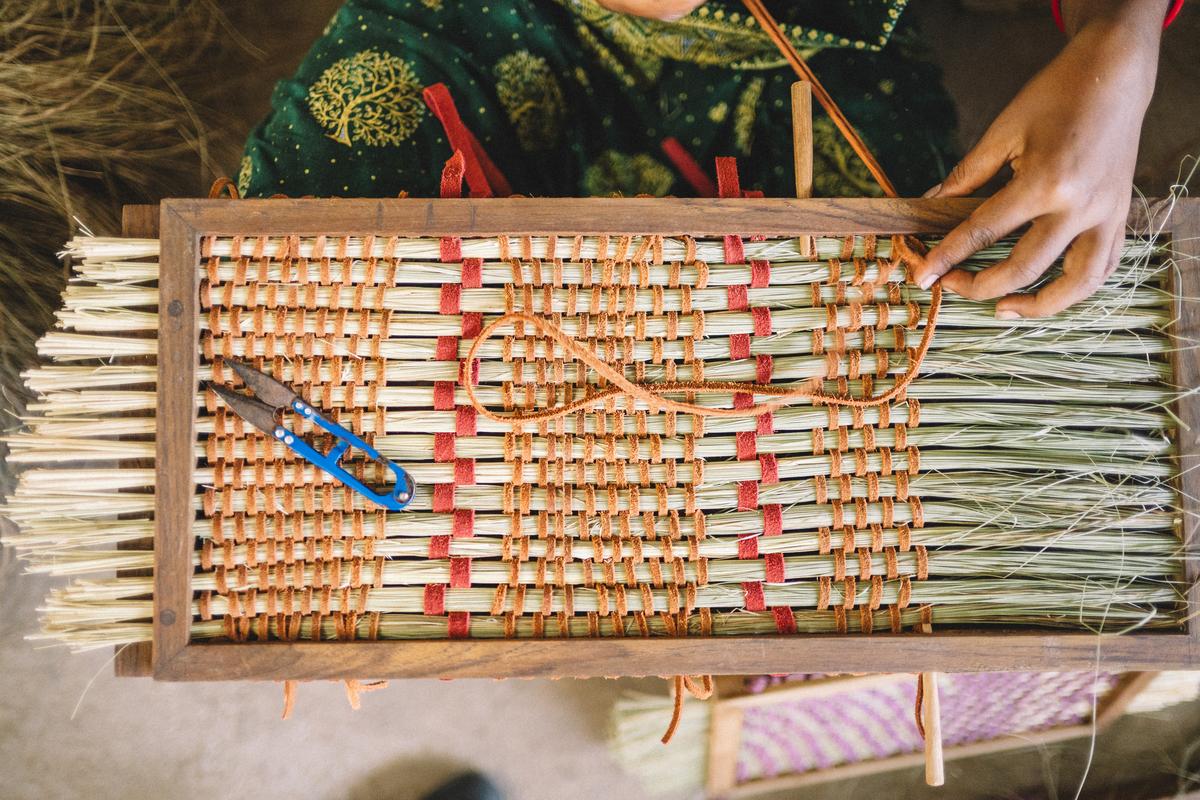
Sabai grass with suede and leather lacing.
Of textile and teak
At ID 2025, Boito debuted its first capsule collection of home textiles, featuring Odisha’s heritage khandua bandha silk, Kotpad handloom cotton, Pipli appliqué and Habaspuri silk, on Niraba furniture. The door panels are a bridge in the collaboration as Boito’s woven textiles mirror the motifs and elements carved into the wood.

Niraba Kiran (left) and Prabha Lamp (right).
The textiles in deep red, ivory and navy, painted a pretty picture at the Niraba booth. Maheshwari says the collaboration is an instrument to take traditional weaving into a future-ready and functional dimension. “My main aim is to spotlight Odisha, so the artisans get an opportunity to challenge themselves, and for the next generation to pick up the craft to showcase their expressions,” she adds.
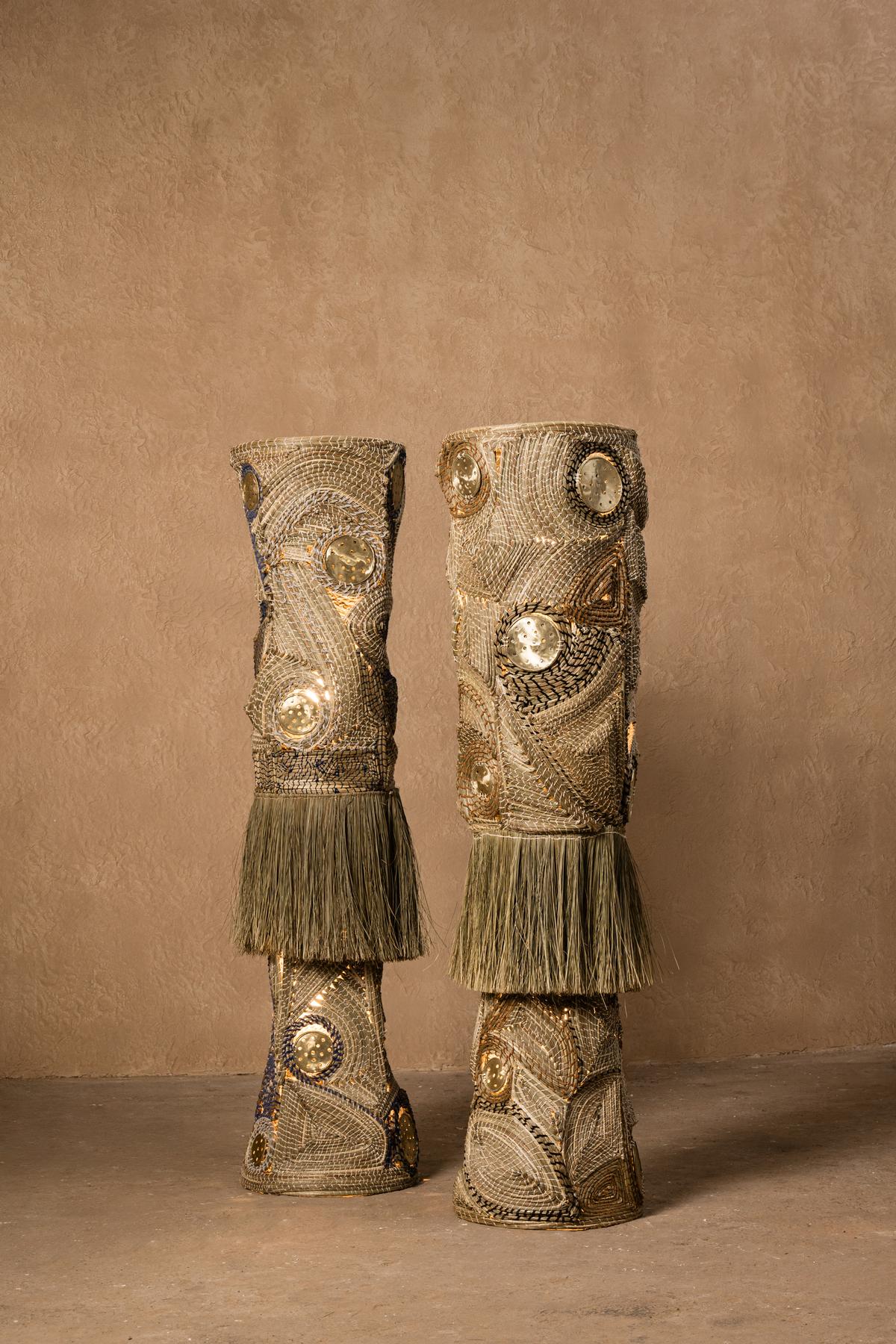
Niraba deepa lamp
Boito works with 17 weaving clusters across the State. While such material and craft partnerships open a new pipeline of revenue, the main focus is an eagerness to push boundaries, Maheshwari states. With Niraba, furniture meets woven art, and the journey has been eventful and enriching. “The collection is a step towards creating sustainable opportunities for craftspeople to expand their skills, earn steady incomes, and see their work valued in new contexts of collaboration,” says Ginwala. The wood used across the collection is reclaimed teak, and the collection pursues circularity in process and product, where every material — grass or wood — is carefully calibrated and crafted to create a product that is greater than the sum of its parts.
Boito at Burning Man
Boito is the Odia term for ‘boat’, derived from the ancient maritime festival Boita Bandhana, commemorating the voyage of mariner merchants, Sadhabas, whose precious cargo included textiles. Odia craft shone at Burning Man 2025, with a 17-foot sculpture representing a mythical creature, Navagunjara ( of nine animal forms), brainchild of Richa Maheshwari and Jnaneshwar Das, two Odia engineers and artists. “Navagunjara Reborn: The Phoenix of Odisha” showcased Odisha’s crafts (pattachitra, dhokra) merged with the mythical nine-formed creature symbolising rebirth, unity, and Indian artistry on a global stage.
The freelance writer is based in Chennai.
Published – December 12, 2025 10:02 pm IST
#Niraba #brings #sabai #grass #weaving #contemporary #furniture #design