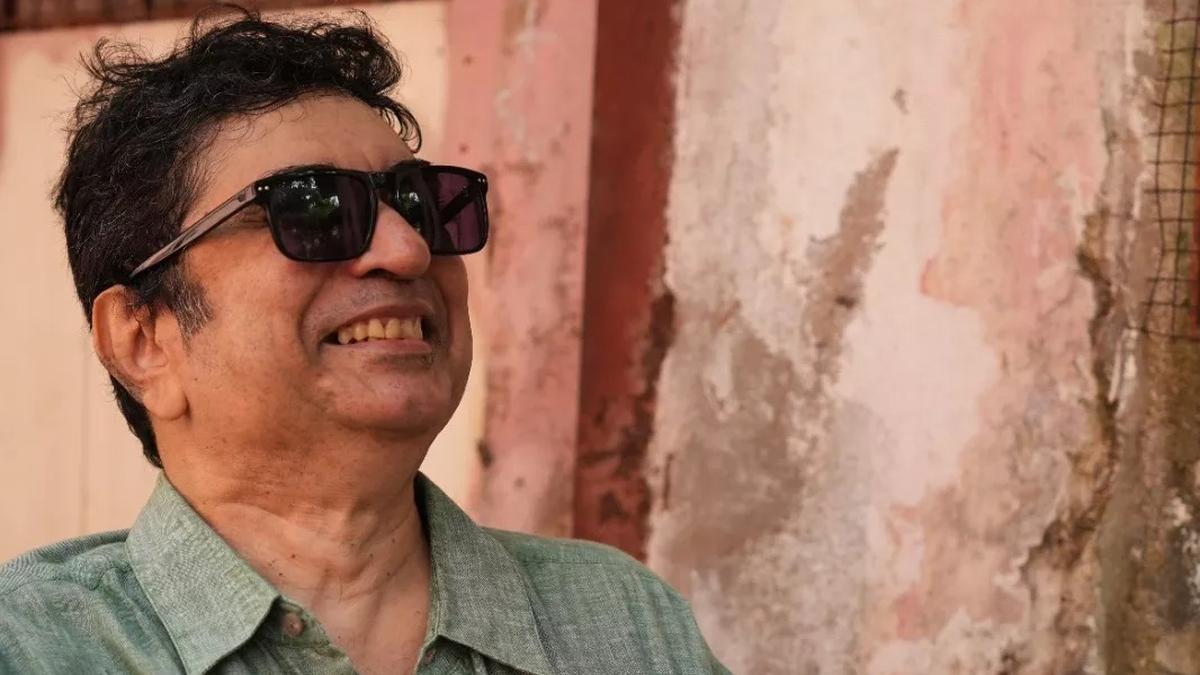
On certain winter afternoons in Kolkata, when the light turns the colour of old newspapers and tram wires hum faintly over near empty streets, the city begins to resemble one of Anik Dutta’s films.
A tea stall radio crackles with an old song. A retired communist argues about cinema beneath fading political graffiti. Somewhere, a promoter’s hammer rises over another collapsing balcony while a group of Bengalis mourn the city they themselves are steadily dismantling. No contemporary filmmaker understood the tragic comedy of this city better than Anik Dutta. And perhaps no filmmaker held a mirror more mischievously to Bengali nostalgia.
Anik, who passed away on May 27 in Kolkata, belonged to a rare species of Bengali artist: one who loved Kolkata deeply enough to mock it relentlessly. His films were crowded with ghosts both literal and metaphorical but beneath the satire lay an aching tenderness for the city.
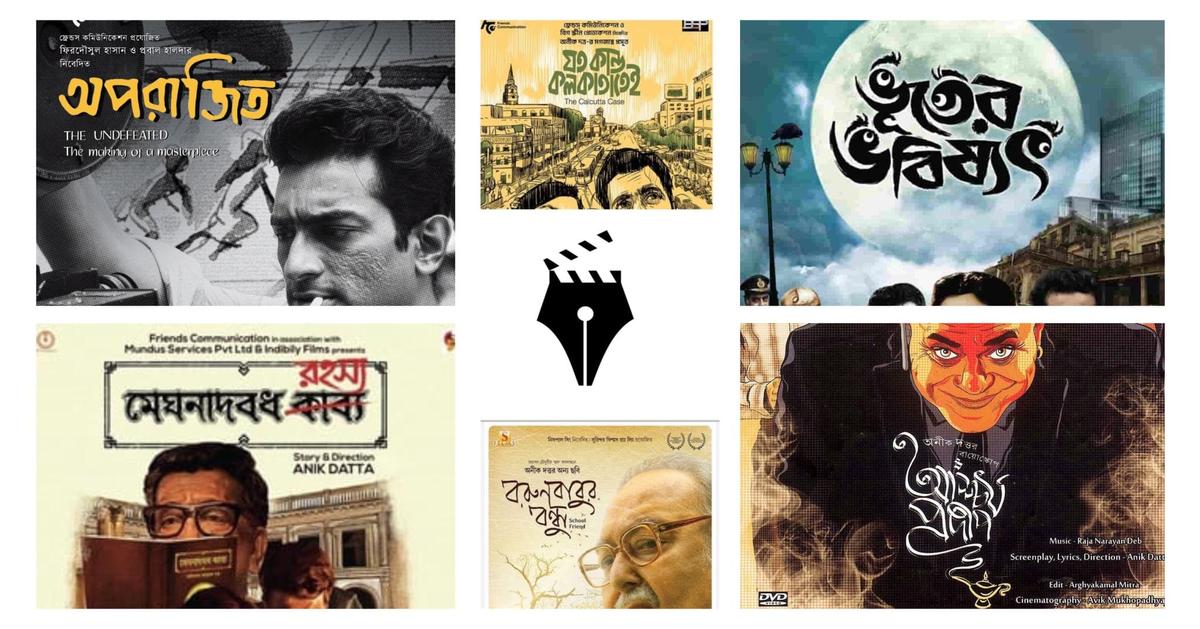
A collage of Anik’s films’ posters.
| Photo Credit:
Anik Dutta / Facebook
When Bhooter Bhabishyat released in 2012, Bengali cinema changed almost overnight. Here was a film that could be wildly entertaining while still politically observant, culturally self aware and unmistakably local. It spoke in the language of Kolkata addas, para politics, inherited anxieties and middle class melancholy. It ridiculed Bengali nostalgia while simultaneously becoming one of its greatest cinematic monuments.
Its ghosts or colonial sahibs, forgotten theatre artistes, decaying aristocrats and modern urban casualties were less supernatural entities than citizens abandoned by time.

In hindsight, the film feels almost prophetic. Kolkata itself had become haunted: by vanished grandeur, by cultural insecurity, by old intellectual confidence curdling into endless remembrance. Anik understood this before most others did.
A filmmaker who made words linger
In Bengali cinema, where realism often arrived wearing solemnity, Anik brought back wit, theatricality and velocity. His films moved through sharp, layered conversations and deeply referential dialogue that audiences carried back into their daily lives.
Professor Sanjoy Mukhopadhyay, former Head, Department of Film Studies, Jadavpur University believes this was central to the late filmmaker’s appeal. “When we recall Anik’s films,” he says, “what we remember most are his dialogues perhaps more than the images. Bengal has a very strong oral tradition. After Uttam Kumar, Bengali cinema was no longer hero driven. We fell into a habit of copying Tamil films without really understanding how to create spectacle in our own cultural language. Anik helped deliver us from that stagnation. In an industry obsessed with nostalgia, he intentionally pointed toward the cultural failures of contemporary Bengal. That was his greatest achievement,” he notes.
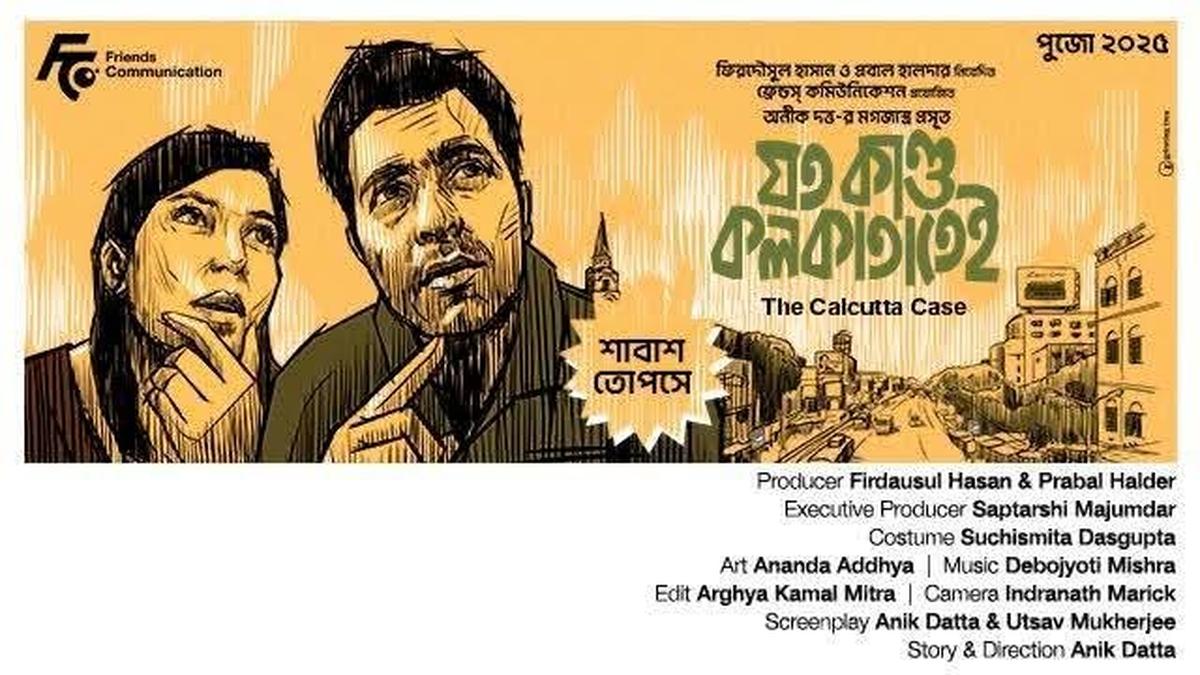
His last film Jato Kando Kolkata Tei (2025) was a Bengali detective mystery thriller.
| Photo Credit:
Anik Dutta / Facebook
He recalls how Bhooter Bhabishyat satirised promoter culture, political opportunism and urban decay at a time when few mainstream Bengali films dared to engage contemporary reality so directly. “After Uttam Kumar, Bengali cinema lost its sense of spectacle. Anik delivered us from stagnation, ” he adds.
Yet Dutta’s cinema never abandoned affection for the very world it critiqued. Even his sharpest jokes carried warmth. He laughed at Bengali sentimentality because he himself belonged to it completely.
Precision, panic and tea
Before cinema, Anik came from advertising , a background that shaped the unusual rhythm and precision of his films.
Filmmaker Sudeshna Roy, who knew Anik for the last 30 years remembers him as meticulous to the point of obsession. “We used to joke that he could make a feature film in 30 seconds,” she says, recalling his advertising days. “He was serious about every line, every subtitle, every costume. During dubbing, we could spend hours selecting a single word, ” says Sudeshna who had written the subtitles for Anik’s films Meghnadhbodh Rahasya (2017) and Borunbabur Bondhu (2019).
She laughs while remembering his famously anxious temperament: “We used to call him “Panic Dutta”. He once did 20 takes for an ad film we were shooting for Biskfarm biscuits.”
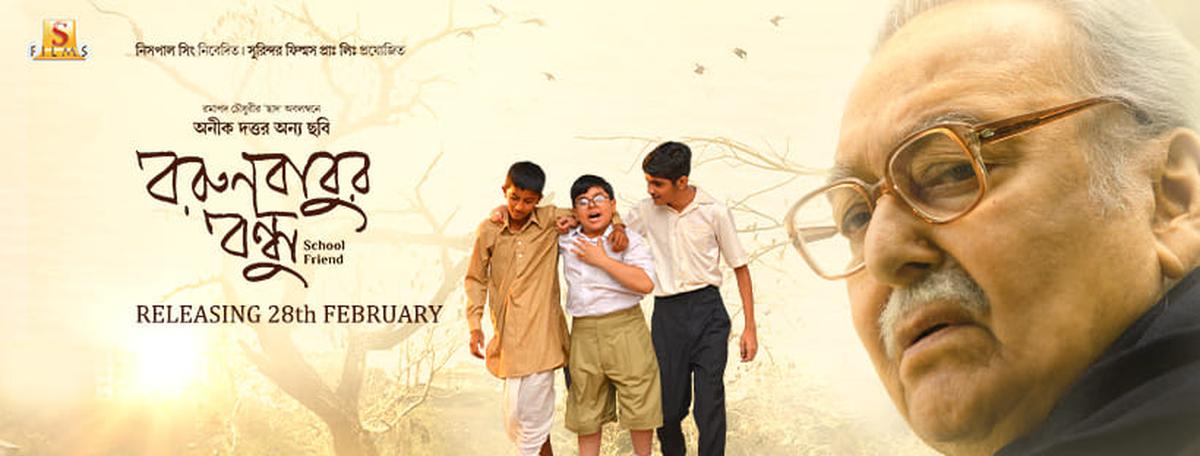
Starring the iconic actor and director Soumitra Chatterjee, Barunbabu’r Bondhu (2019) was an adaptation from Ramaprasad Chowdhury’s story.
| Photo Credit:
Anik Dutta / Facebook
Even when working within comedy, Anik carried great seriousness toward his craft. Sudeshna points to Anik’s Aparajito (2022) his daring reimagining of Satyajit Ray during the making of Pather Panchali as proof of his ability to balance cinephilia with accessibility.
“It was incredible. A biographical film that still kept audiences engaged. That was his gift. He made different films, but he made them watchable,” says Sudeshna.
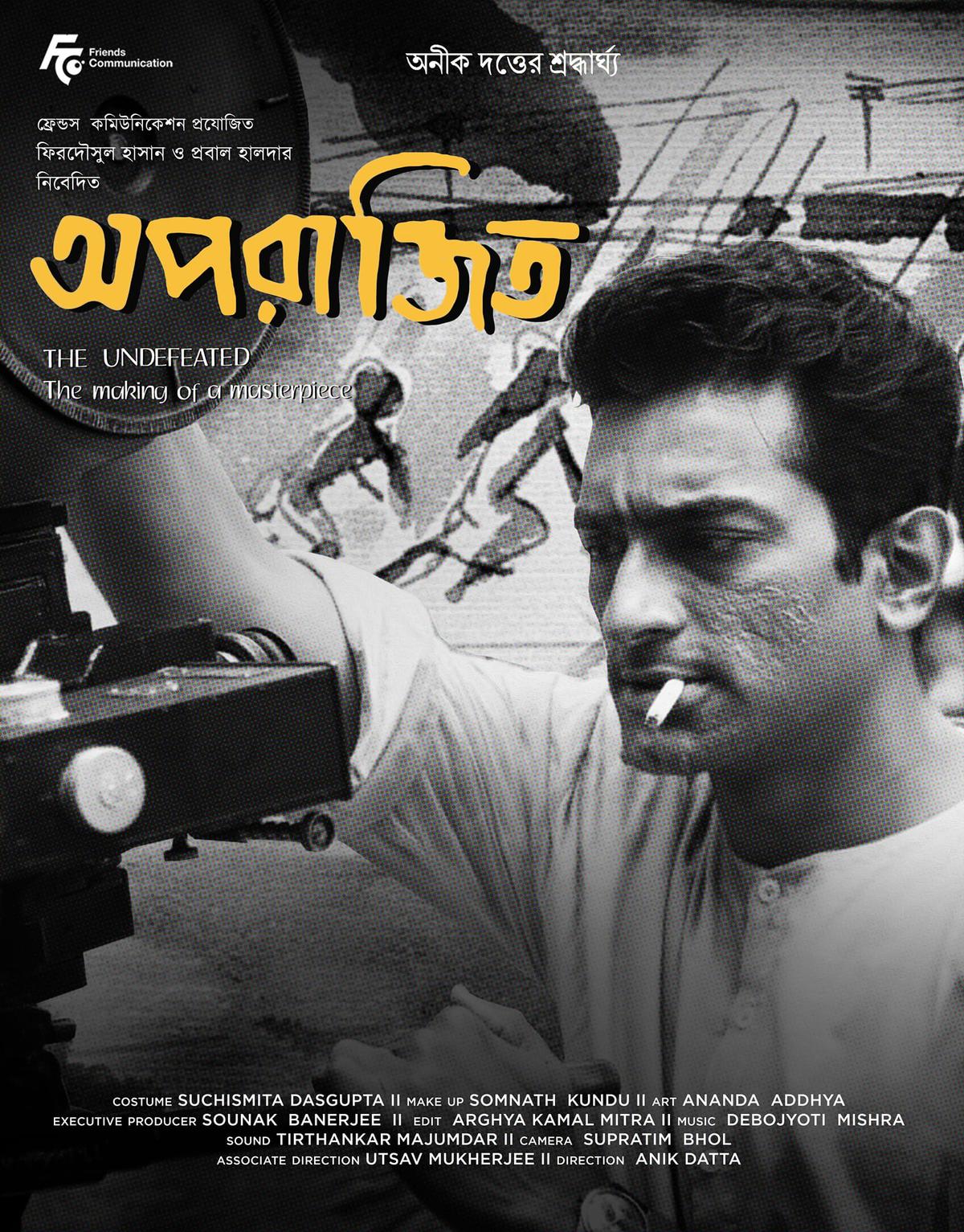
A poster of Anik’s Aparajito (2022)
| Photo Credit:
Anik Dutta / Facebook
The courage to approach Ray
To make a film inspired by Satyajit Ray in Bengal is to approach something close to civic religion. Anik did exactly that with Aparajito (2022) , a work that revisited the struggles behind the making of Pather Panchali with startling tenderness and confidence.
Acclaimed filmmaker Goutam Ghose and Sheriff of Kolkata, who has known Anik since his childhood, says “My younger brother Aniruddha Ghose was his classmate in Patha Bhavan school. We have met so many times at addas.” He describes Anik’s Aparajito “a daring attempt handled intelligently. “He could have made so many more films,” Ghose says quietly. “We have lost a truly skilled filmmaker.”
There was something deeply moving about Anik returning to Ray at this stage in his career. Ray had once chronicled the birth of modern Bengali cinematic language and Anik, decades later, revisited the creation myth itself. Cinema that was able to fold inward, as if Bengal was dreaming about its own dreams again.
A week before his death, filmmaker and music director Sandip Ray received a phone call from Anik. In hindsight, the conversation now feels unbearably cinematic and unfinished like a scene Anik may have written.
“A week ago he phoned me up and said he wanted to meet me because he had some plans,” Ray recalls in his unmistakable baritone, reminiscent of his father Satyajit Ray. “I asked him whether he could discuss it over the phone. But he said no, he wanted to discuss it face to face. That never happened. I still do not know what he wanted to say. ”
The incompleteness of that moment feels strangely appropriate for a filmmaker whose work constantly wrestled with memory, disappearance and unfinished inheritances.
Sandip remembers Dutta as a “die-hard admirer” of Satyajit Ray who embedded tributes to the maestro throughout his cinema. “He was a very serious filmmaker,” he says. “A very good technician. He knew the grammar of filmmaking, pacing, preparation. He always did his homework before making a film,” adds the director.
The melancholy beneath the laughter
Actor Parambrata Chatterjee remembers working with him during a turning point in his own life, when the shoots of Kahaani (2012) and Bhooter Bhabishyat overlapped. “There was a point where it looked like I might not be able to do the film,” Parambrata says. “Anik da was very upset hearing that. Somehow we managed it, and the film eventually became a cult classic,” adds Parambrata.
He describes Anik as “a unique individual” with fiercely held aesthetics and ideas. “He made films his own way and stuck to his convictions with all his might.”
When Parambrata’s own directorial debut Jiyo Kaka (2011) didn’t do well commercially, Anik was full of praise for the film. “He understood the genre of the quirky fun film,” Parambrata says. “He understood what worked and what didn’t. We wish we could have had a few more of his signature works,” concludes Parambrata.
For all their humour, Anik’s films often carried the emotional weather of contemporary Bengal: exhaustion, loneliness, disillusionment and survival through wit.
Actor and magician Mumtaz Sorcar, who worked with him in multiple films including Bhooter Bhabishyat, struggles repeatedly to speak through grief. “I’m still in denial,” she says. “He was a perfectionist, a creative genius, but also someone deeply protective of the people he cared about.”
Sorcar remembers him less as a celebrated filmmaker and more as an unexpectedly tender presence and someone who fussed over whether she had eaten, who guided her almost like a daughter. “He was a fighter. He stuck to his beliefs and his philosophy despite pressure,” she says, adding “I want to remember him through his work, through the characters he gave us.”
Perhaps that is how Kolkata will remember him too.
Not through the circumstances of his death, but through the worlds he created: anxious, articulate, funny, wounded worlds populated by people trying desperately to preserve dignity amid collapse.
#Anik #Dutta #obituary #filmmaker #captured #Kolkatas #nostalgia #decay