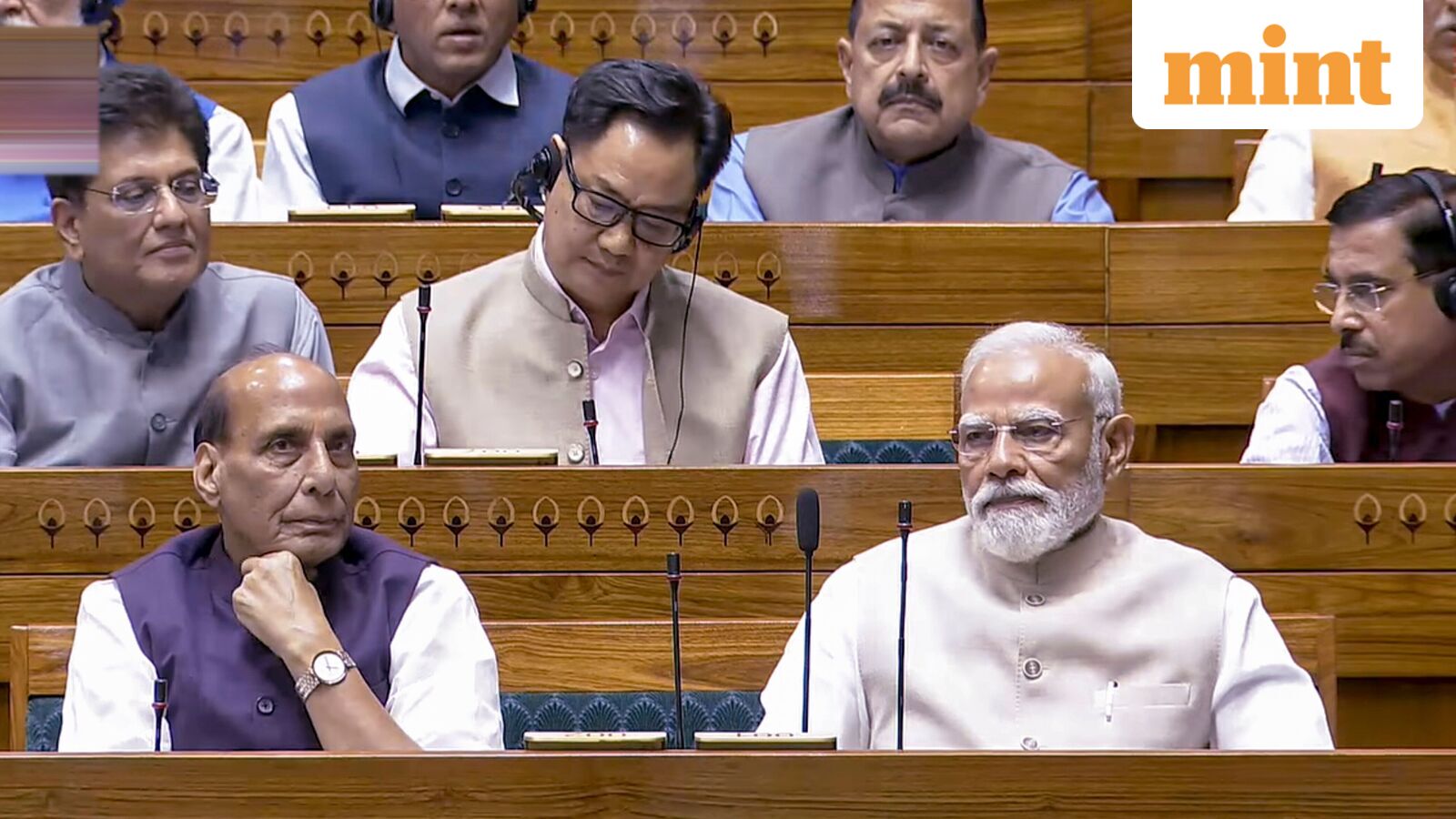
The Constitution Amendment Bill to tweak the Women’s Reservation Act 2023, or the Nari Shakti Vandan Adhiniyam, was defeated in the Lok Sabha on 17 April as the Union government failed to get a two-thirds majority in the House during the special session.
This basically means the Lok Sabha rejected the Narendra Modi government’s proposal to expand the Lok Sabha’s existing strength from 543 to 850 seats and to allow delimitation of seats based on the 2011 Census.
The landmark bill needed a two-thirds majority in the Lok Sabha, approximately 360 votes, to pass in the lower house of Parliament. However, only 298 MPs voted in favour of the bill, and 230 Members of Parliament (MPs) voted against it.
Earlier in the day, Prime Minister Narendra Modi had appealed to the Opposition leaders to “take a sensitive decision by voting in favour of women’s reservation.”
The government had introduced three bills in the Lok Sabha on Thursday, the first day of the special session of Parliament. The bills were the controversial Constitution (One Hundred and Thirty-First Amendment) Bill, 2026; the Union Territories Laws (Amendment) Bill, 2026; and the Delimitation Bill.
However, after the Constitution bill was defeated on Friday, Union minister Kiren Rijiju said the government would not proceed with the other two bills. There is one more day left in the session.
Why is it a landmark development?
This is the first time a Bill introduced by the National Democratic Alliance (NDA) government led by Prime Minister Narendra Modi has been defeated in Parliament.
Earlier, the NDA government faced legislative challenges, such as the Land Acquisition Act at the beginning of its first term and the farm laws in its second term. But this is the first time the government has failed to pass a bill put to a vote.
There have been rare occasions when the Union government has faced hurdles in getting legislation passed by Parliament. One such instance was the Prevention of Terrorism Act, brought by Prime Minister Atal Bihari Vajpayee-led NDA government in 2002. The Bill was defeated in the Rajya Sabha, but the government eventually got it passed through a joint session.
Similarly, the 64th Constitution Amendment, giving constitutional status to Panchayati Raj institutions, was defeated in the Rajya Sabha. The Amendment was brought by the Rajiv Gandhi-led Congress government. It was later passed as the 73rd Amendment of 1992 under the Prime Minister PV Narasimha Rao-led Congress government.
What happens with the Women’s Reservation Act, 2023?
Through the three bills, now not in contention, the Union Government wanted to tweak the Women’s Reservation Act, which mandates 33 per cent reservation for women and was passed in 2023.
Although the President had granted assent to the women’s reservation law in 2023, it had not come into effect. The Centre, however, brought the 2023 Bill into force on 16 April, even as Parliament debated fresh constitutional amendments relating to delimitation and the implementation of women’s reservation.
The 2023 Act on Women’s Reservation
As per the 2023 Act, women’s reservation will take effect only after the delimitation, which is carried out after the next Census. This meant that women’s reservation would be implemented only after the delimitation exercise based on the next Census.
However, on 16 April, the Centre moved the Constitution (131st) Amendment Bill to increase the Lok Sabha’s seats to 850. The Bill further proposed to modify the existing condition linking women’s reservation to delimitation carried out after the next Census, to enable its implementation immediately after the delimitation exercise.
With the defeat of the Constitutional Amendment in the Lok Sabha on Friday, the Women’s Reservation Act of 2023, which mandates 33 per cent reservation for women, stays in effect.
The law is in force in its existing form (without a tweak), which means it still requires the census and delimitation to be carried out first to implement the 33 per cent reservation.
Remember, the Opposition had supported the 2023 Bill but opposed the fresh amendments to delink delimitation from reservation.
“We are in favour of women’s reservation. If the government implements the Women’s Reservation Bill passed in 2023, the entire Opposition will support it without exception,” Leader of the Opposition in Lok Sabha, Rahul Gandhi, said on Friday.
Amit slams the opposition
Union Home Minister Amit Shah on Friday slammed the opposition for objecting to the government’s attempts in the Lok Sabha.
“Today, a very strange scene unfolded in the Lok Sabha. The Congress, TMC, DMK, and Samajwadi Party did not allow the passage of the essential Constitution Amendment Bill for the Nari Shakti Vandan Adhiniyam. Rejecting the bill that would grant 33% reservation to women, celebrating it, and raising victory cries over it is truly reprehensible and beyond imagination,” he said in a post on X.
Rejecting the bill that would grant 33% reservation to women… is truly reprehensible and beyond imagination.
We are in favour of women’s reservation. If the government implements the Women’s Reservation Bill passed in 2023, the entire Opposition will support it without exception.
Now, the women of the country will not get the 33% reservation in the Lok Sabha and state assemblies, which was their right, Shah said, adding that the Congress and its allies have done this not for the first time, but repeatedly.
“Their mindset is neither in the interest of women nor of the country. I want to tell them that this insult to Nari Shakti will not stop here; it will travel far and wide. The opposition will have to face the ‘wrath of women’ not only in the 2029 Lok Sabha elections, but at every level, in every election, and at every place,” he said.
Key Takeaways
- The defeat of the Women’s Reservation Bill represents a rare legislative setback for the Modi government.
- The existing Women’s Reservation Act, passed in 2023, remains ineffective until the census and delimitation are completed.
- Political dynamics around women’s reservation highlight the complexities of bipartisan support in legislative matters.
#Modi #Govts #amendment #move #defeated #Lok #Sabha #womens #reservation #Parliament #Explained